Children’s mental health is in a crisis, we are often told, particularly among poor, homeless, BIPOC, and immigrant kids. Systemic racism, discrimination, inequitable educational systems (private vs public), and COVID stress/ trauma are the main causes.
One issue is infectious diseases/ public health leaders have been siloed, focusing on COVID transmission, along with tests, treatments, vaccine uptake, etc, and they have neglected mental health. Tradeoffs are real. We could stop COVID transmission entirely by a strict lockdown but that would destroy what we have left of our sanity.
Instead, we need a nuanced, balanced approach focused on rebuilding mental health among everyone, and particularly the most marginalized communities. That means having much better public schools; adequate green space to play; sports, arts, and music programs; and rebuilding our crumbling democracy. Without voting rights and equitable health care we will find ourselves in a bad place very quickly.
Our kids must be our top priority. Here in Boston, we wrote a petition a few months ago asking for a CDC Epi-Aid to the Boston Public Schools after a COVID outbreak. We published an op-ed in the Boston Globe and got 92 signatures on the petition, but no Epi-Aid was never done. As far as I know, there hasn’t been a published or disseminated outbreak investigation. And we certainly don’t have a strategy for helping restore children’s mental health, despite an engaging new mayor who has kids in the Boston Public Schools.
What can be done? How can we organize to help our kids, and our families heal? Soon it will be spring, and then summer. Now is the time, now is the opportunity. We cannot fail.
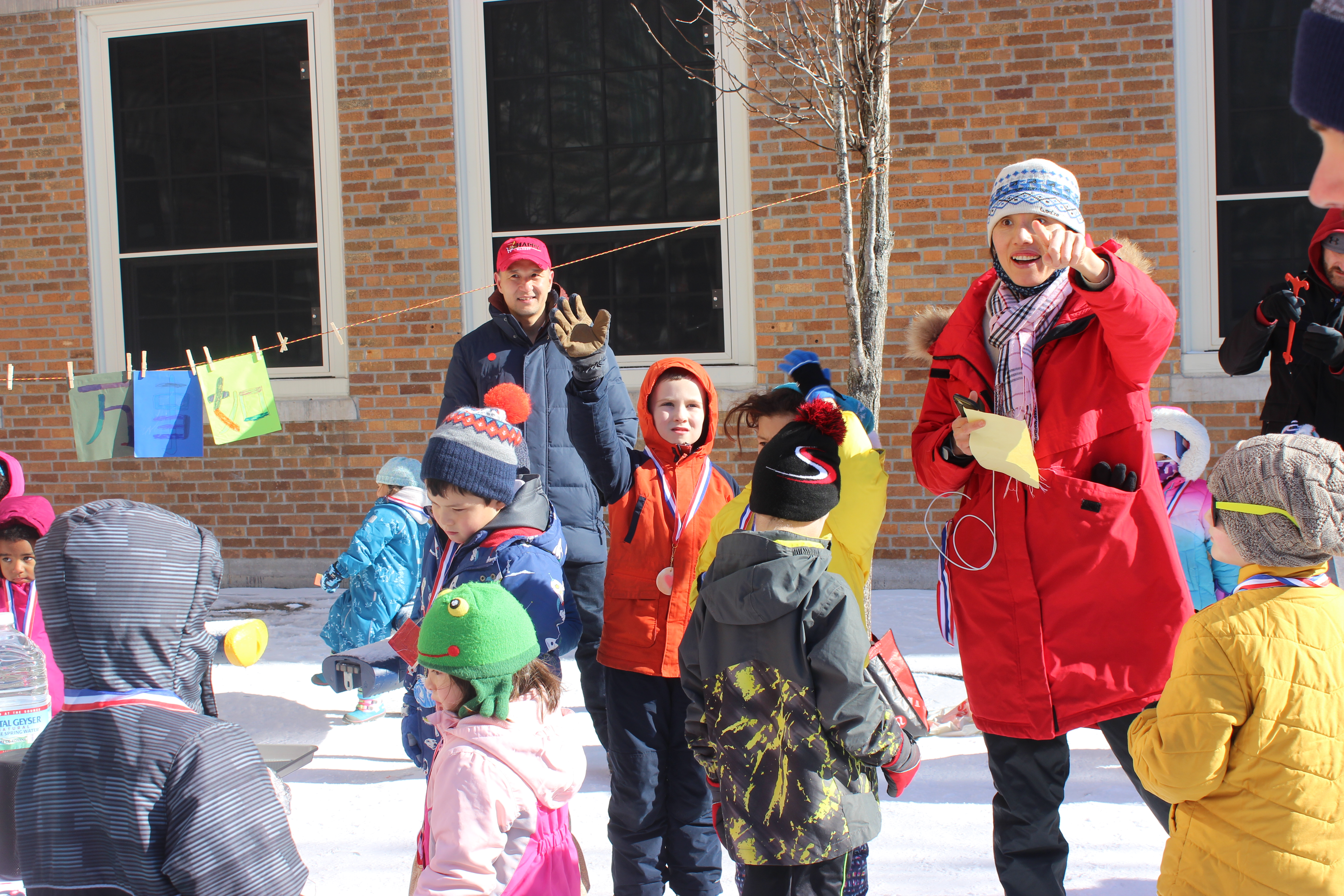
Outside Curley School earlier today, for a Chinese New Years celebration
In partnership with Global Arts Live, “SanDance!,” an independent documentary film about the age-old dance culture of Africa’s San (Bushman) First Peoples, will stream live on Facebook and YouTube on Sunday, Feb. 6 at 2 p.m EST. After the live broadcast, which will include a Q&A with filmmaker Richard Wicksteed, the film and conversation will be streamable on the same platforms beginning Feb. 8.
“We made ‘SanDance!’ to honour and celebrate the beauty, resilience and strength of San/Bushman culture in southern Africa, as expressed through the San’s ancient and sublime dance traditions,” reads a statement about the film. “Against all odds, San culture endures today, in the face of post-colonial cultural marginalization and ongoing cultural repression and land dispossession.”
I saw the trailer (below) and think this is a film worth watching. We can learn a lot from indigenous music and dance. Who knows, being able to make this art could be essential to our survival.
Yesterday I attended the Emory University infectious diseases conference (it is open to the general public), and enjoyed learning the latest about influenza from Dr. Anice Lowen, associate professor of medicine. And frankly, it was sobering. The current burden of seasonal influenza is substantial – the number of deaths from flu is comparable to the number from motor vehicle collisions. You can check out the CDC Fluview website to see the data.
But the conference focused on genetic reassortment, pigs, birds, and ferrets. Remember 1918? We are facing the real danger of a new spillover event. There is no pan-influenza vaccine available. Even if the government invested lots of money, say a “moonshot” research program for a new flu vaccine, uptake would likely be poor, based on our experience with the COVID vaccines.
So the bottom line is – COVID was bad, but a pandemic flu could be far worse. We need President Biden and our health leaders to prioritize dramatic systems change before it is too late. That includes a single payer / Medicare-for-All, a major refunding of our public health system; alliance with WHO, flu vaccine research, etc. What are your thoughts?
Thanks for reading! If you enjoyed this blog post, please feel free to leave a comment or share with others. And remember, my blog is always free.
It was a late afternoon in the spring of 2011, and my pager went off once again. The ED was calling – another ICU admission, a critically ill middle-aged man who needed to be brought up to the unit after a cardiac arrest. Oh, how I wished I could be surfing at La Jolla Shores, or eating tacos and mangos down on the beach at Playas de Tijuana.
We put in our lines, ordered the cooling protocol, and called the CT surgeon to start ECMO, just like we had been taught. We met with the family, wrote our notes, and moved on to the next patient. And then the next. Always rounding.
–
Yesterday, I flipped through a JAMA which had recently arrived in my mailbox and spotted a randomized controlled trial of 334 patients from France. The study looked at moderate hypothermia in cardiogenic shock (33-34 degrees) versus normothermia. The researchers found that it was ineffective to cool people, although the study was probably underpowered.
Much of what we do in medicine is not based on randomized controlled trials and meta-analyses, and may therefore be dangerous. I don’t think most people really understand how far we are from “primum non, nocere,” first do no harm. It wasn’t just our patient in California back in 2011 – many patients are affected by this.
It’s not just critical care medicine and hypothermia in cardiogenic shock. Psychiatry, surgery, infectious diseases, general internal medicine, and primary care are full of interventions which might not benefit the patient. More randomized trials are needed to figure out what works and what doesn’t. Importantly, we must rethink standards for a medical intervention and recognize the difference between the science and the art of medicine.
If a treatment lacks sufficient scientific evidence then shared decision making between the patient or family member and the clinician is required. We all want the same thing – the highest quality of care for every patient – and shared decision making is the way to get there.
Practically speaking, however, there’s a lack of time for this. If America could obtain single payer/ Medicare-for-all, that would free up time to have these important conversations.
The article started with the story of a March 2020 U.S. Department of Justice lawsuit against a major manufacturer of spinal-surgery devices and related entities, accusing the company of paying nearly three dozen spine surgeons a total of more than $8 million in sham consulting payments.
I’ve thought a lot pharmaceutical and device companies over the years, and agree with the authors that we must reduce the harm associated with improper financial relationships between manufacturers and physicians. I do believe that clinicians could be required to disclose such relationships directly to patients. Cases of improper financial relationships between manufacturers and physicians not only harm patients, but also threaten the doctor patient relationship. Trust is so important in health and healing.
The main issue I see is a nuanced discussion of disclosures between doctor and patient would take time. Extra time would need to be built into clinic schedules to discuss these complex issues. Who would pay for this time? It’s doubtful the private insurance companies would pay. This might fall on the back of already overburdened doctors and patients.
A second issue is of health literacy and science literacy. Many patients don’t have a high educational level and don’t speak English. Would disclosing to every patient be feasible in a busy clinic day? If we had a single payer/ Medicare-for-all, this situation would be different. There would be more time to talk to patients about these issues.
Thanks for reading! If you enjoyed this blog post, please feel free to leave a comment or share with others. And remember, my blog is always free.
Along with that salutation, I wanted to write about a recent paper from New York City, The impact of COVID-19 on people who inject drugs in New York City. This was written by a friend of mine, Dr. Benjamin Eckhardt, along with his colleagues.
The results are as expected for those of us who do clinical work in the United States. Ben found that COVID-19 has negatively affected PWID. Placing dispensing machines of harm-reduction supplies in communities where PWID live and increasing secondary exchange, mobile services, and mail delivery of supplies may help maintain access to lifesaving supplies during big events, such as COVID-19.
The question I see is one of community organizing. How can we overcome the NIMBYism (Not in my backyard-ism) attitude of fear and stigma against people who use drugs? We need a general education campaign about the drug use and how harm reduction can help ameliorate the problem.
Finally, I recently learned about a concept called the “Zone of Personal Development,” introduced by psychologist Lev Vygotsky in the 1930s. Each of us, no matter how young or old, should focus on an area of learning that occurs when a person is assisted by a teacher or peer with a higher skill set. Regarding harm reduction, that could mean that everyday people could push themselves to have a better understanding of the social determinants of health. Then, they can become advocates for change.
A brief video, below, which also features Margo.
Thanks for reading! If you enjoyed this blog post, please feel free to leave a comment or share with others. And remember, my blog is always free.
One important part of coming to grips with what’s happened to us over the past two years is bearing witness to the dead. Two weeks ago, Martha Katz, Susan Racine and I stood outside the Massachusetts State House for an hour. It was Martin Luther King Day, and we read the names of the COIVD dead. It was a powerful experience to bear witness to the suffering and loss we have experienced. For me this also aligned to the Moral Monday’s movement which was started in North Carolina in 2013 by Reverend Dr. William Barber II and others. So for a little while this morning, it was Moral Monday for me. I wasn’t outside the Massachusetts State House, just in my living room, and read some names.
So many lives lost. This has been a hard few years. I encourage other people to read names. It feels a tiny bit healing to read the names and bear witness to the suffering and deaths from this virus. But this is not about a virus, this is about people and institutions. Governments and leaders, and the ways they reacted, with at times bravery and heroism, and yet at many times, fear and greed. And if we are to learn any lesson from COVID, we have to learn to care about each other.
Thanks for reading! If you enjoyed this blog post, please feel free to leave a comment or share with others. And remember, my blog is always free.
During a lull in yesterday’s blizzard, I went for a walk with a friend of mine, a professor at one of Boston’s universities. We talked about a variety of topics, from snow removal to dogs, from music to Aristotle, and as our conversation wound down, we discussed the media.
I told him that while I was studying at Brown University, I was friends with Arthur Gregg Sulzburger, who is now the publisher and chairman of the New York Times. Unfortunately, Arthur and I lost touch more than a decade ago, but I paid attention to the Times over the years, hoping to reconnect someday with AG.
The question my professor friend and I debated on our snowy walk was about the quality of mainstream media coverage today, in America and around the world. Certainly more and more people are criticizing the media for being corporate, supported by advertisers and therefore biased.
But is that really true? Journalists go to school for years and are supposed to abide by a code of ethics. And even if the media is biased, what is the solution? Even independent, nonprofit news organizations such as Democracy Now have their biases.
We’d like our reporters, writers, and TV and radio anchors to be completely objective and free from corporate influence, like a scientist, or blindfolded Lady Justice. But is that realistic? The New York Times is competing with so many other media outlets, so it needs sensationalistic, attention grabbing headlines and stories. For example, today it’s trying to get us riled up about Democratic politicians taking dark money – presumably true, but what about newspapers and other media outlets taking corporate money?
The media reform movement has been around for a century. In 1922, in his book, Public Opinion, Walter Lippman argued that the mass media are the principal connection between events in the world and the images in the minds of the public. He stated that the media has an ability to infuence the thoughts and opinions of the members of the public consuming the content. More recently, the movement for media reform has led to the rise of citizen journalism and the blogging culture. That’s exactly what I am trying to do with my Health and Healing blog – to provide my own independent media voice, in my spare time, always for free.
Future directions for this blog include plans to translate some of the posts into Spanish. I would also love to find someone to help me translate some posts into Chinese, Korean, or Russian, to continue to build a more global audience. Since my blog is mostly focused on preventive medicine and health, it would be great to connect with nurses and physicians in other countries. I already have many links across the globe and would love to have many more connections. I’m not competing with Arthur and the New York TImes with my little non-profit one man show here, but in a way, I am.
Obviously I’dl like you to support my blog and share and comment on my posts, and help me improve the writing and video content, before you get engrossed in the latest scandal written up by the professional journalists at the New York Times and other outlets.
Well, thanks again to my professor friend for a stimulating conversation as we walked through the snow. Finally, to close out this blog post, I told my professor friend about the Regina Carter jazz concert in Boston on March 27. It’s going to be a great one…
If you have any thoughts about media reform or the blogging movement, or how to get Margo to do tricks on my videos, feel free to leave them below.
Thanks for reading! If you enjoyed this blog post, please feel free to leave a comment or share with others. And remember, my blog is always free.
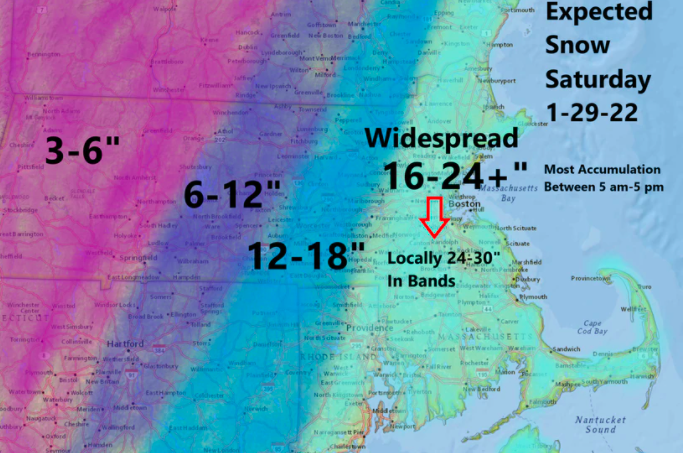
Here in Boston, people are hunkering down for the weekend because a historic storm is arriving. High winds, cold temperatures, and lots of snow are in the forecast. This extreme weather has me thinking about global warming and the oil boilers which are going to be keeping people warm this weekend.Meanwhile, we know that fossil fuel companies have waged a campaign for decades to deflect blame and responsibility and delay action on climate change. Can we actually save the planet? I’ll say one thing – it’s an “all hands on deck” moment. Each of us can make an impact, but we need to work together and speak out.
My personal plan has been to improve the insulation on my triple-decker house using a group called Mass Save and to get rid of our oil boiler. In its place, I received two quotes from companies, New England Ductless and Excel Mechanical, to install Mitsubishi electric heat pumps. I also have been considering getting rid of our gas stove and gas water heater, installing solar panels on the roof of the house, and trading in our Rav-4 SUV for an electric car. My plan isn’t prohibitively expensive and we could make it work financially. Yet because of my own immunity to change, I haven’t done it.
Immunity to change – that’s the fundamental issue. Years ago, I audited a class at the Harvard Graduate School of Education on this topic, taught by Robert Kegan and Lisa Lahey. What is holding us back from making those changes in our lives that we really need to make? It’s actually a psychological question, and the answer is we need to understand the root causes of our inertia. They include childhood experiences, personal beliefs, family norms, and cultural expectations.
Working with others is the answer when we know we must change. This is the case for going fossil fuel free, losing weight, or learning a foreign language. What are you working on changing for 2022? The new year is still young. A few of my New Years Resolutions are to relax, write a book, improve my physical fitness, get better at violin and music, improve my Korean, learn basic cantillation (chanting in Hebrew), and to install a sprinkler system in our home to protect us in the case of fire. I’m also planning to travel to California and to Ohio, to see my father’s grave. So far I have made a little bit of progress on those goals, and we’re already 29 days into the new year. So I need to refocus on how I can accomplish them.
Yes, each of us can change, and all it takes is our attitude! Developing self-confidence and self-discipline are the most important issues of our time. Another bit of change I need is to get off the couch, pick up a shovel, and start clearing the steps and the sidewalks. This blizzard is going to be a big one – it reminds me of the snowy 2015 morning when I walked 4 miles through the streets of Boston to go to see patients at the Brigham.
Thanks for reading! If you enjoyed this blog post, please feel free to leave a comment or share with others. And remember, my blog is always free.
A few days ago, my violin teacher Rob Flax introduced me to the song Cissy Strut, which was recorded by The Meters in 1969. Of note, Art Neville, brother of Aaron, wrote the song and also played it. Rob told me, “In my opinion, if you are making music you are singing or drumming, or both at the same time. The goal is to make people dance, to make the body move, and to groove.” Soon Rob had me beat-boxing and dancing around my bedroom (the lesson was via video because of Omicron). And he gave me a homework assignment – “to try to approximate the melody, chordal information, and rhythmic backing parts including organ fills and rhythm guitar, and to play along with the recording with your violin 8-10 times.” As I did that my goal was to isolate each instrument’s attempt to infiltrate the song.
I was a bit confused but inspired. So I started listening to Cissy Strut, over and over, trying to hear the snare drum, the hi-hat, the bass, the guitar, tapping my right foot, typing on the keyboard (pretending it was a piano), bobbing my head, keeping the rhythm going. I also played “air violin” – thinking about what bowings I might use if I were actually playing a funky jazz fiddle. How could I mimic the articulations of a drum, of a sax?
I swayed back and forth, engrossed in he music, and became pumped up, thinking about the concept of “freedom.” I took off my dog’s collar – she’s free! I am free too! No worries! No EPIC!
Eventually, Margo fell asleep, collarless, and snoozed on the couch as I grooved along with Cissy Strut.
What else happened today? I learned a lot about MaxiFi financial planning software, but am not certain if it is right for me. I learned how to throw the discus at White Stadium in Franklin Park – an ancient game. I read about the neurology of dance. I was in the clinic for a session and saw a few patients. It was a good day.
Now it’s time to dance. Or throw the discus. Or buy snowshoes. A mini-blizzard is bearing down on us in Massachusetts. But EPIC also is demanding my attention…
 Philip A. Lederer