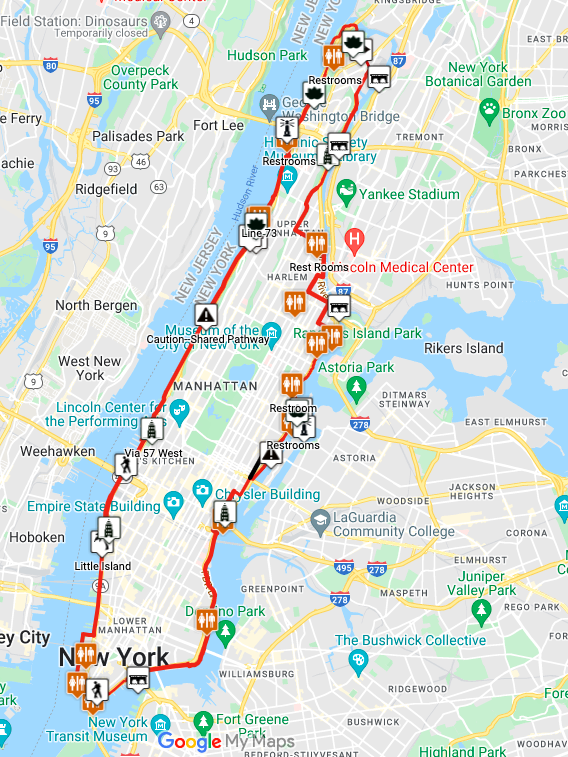
Building off of our successful Malden half-marathon a couple of weeks ago and fifteen miles of walking and running yesterday, I’m getting closer to a new goal: The Great Saunter. This is a 32 mile walk around the perimeter of Manhattan, to be held on May 7th. I learned of it from a fellow singer in the Longwood Chorus who plans to participate in the event.
The route for the walk
Why would anyone want to risk blisters, chafing, heat stroke, and rhabdomyolysis to walk for twelve hours? Perhaps the beautiful weather, river views, and Statue of Liberty? Maybe for the “fun” of it? Long distance walking does seem to be beneficial for cardiovascular and mental health.
I love to walk and to be outside. As an advocate, I like to push back against car culture and fossil fuels whenever I can and demonstrate to people that they can walk and run. In addition, I’ve spent a lot of time in New York City over the years and it never occurred to me that I might be able to walk around the perimeter of Manhattan.
In addition, this walk would be about health equity and federally qualified community health centers (FQHCs). FQHCs are America’s backbone and they are neglected. We need a single payer/ Medicare-for-all and a major reinvestment in FQHCs. I believe we need a Marshall Plan to rebuild our FQHC infrastructure. We have the money in America – it’s just a question of if we have the political will to do the right thing.
In the meantime, I need to start putting in the miles. We’re only 6 weeks away from The Great Saunter.
Thanks for reading my blog entry. If you enjoyed this post, please leave a reply below where it says “enter your comments here.” If you would like to be on my email list, please type in your email address on this website where it says “enter your email address.” Then, click the red button which says “Follow.” You will receive a message and after you click it, and you will receive my daily blog posts
It was 2007, and I was spending a few months in the Dominican Republic. I started in Santo Domingo and went to San Pedro de Macoris (home of Sammy Sosa). Then I headed north to Consuelo with a group from Children’s Hospital of Philadelphia (CHOP). We worked in a clinic and ate mangos in our spare time. It was hot.
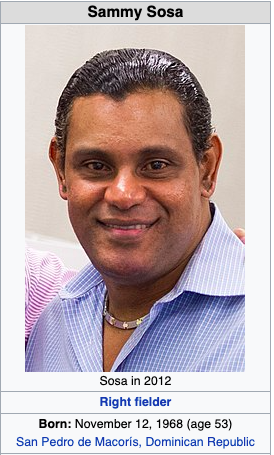
Sammy Sosa, the famous baseball player
Then I went north, to Hato Mayor, and took a boat to Samana, famous for its beaches. My next destination was Puerto Plata, where I helped with an HIV research study for a few days. I passed back through Santiago and spent another six weeks in Santo Domingo living with a family working on the study.
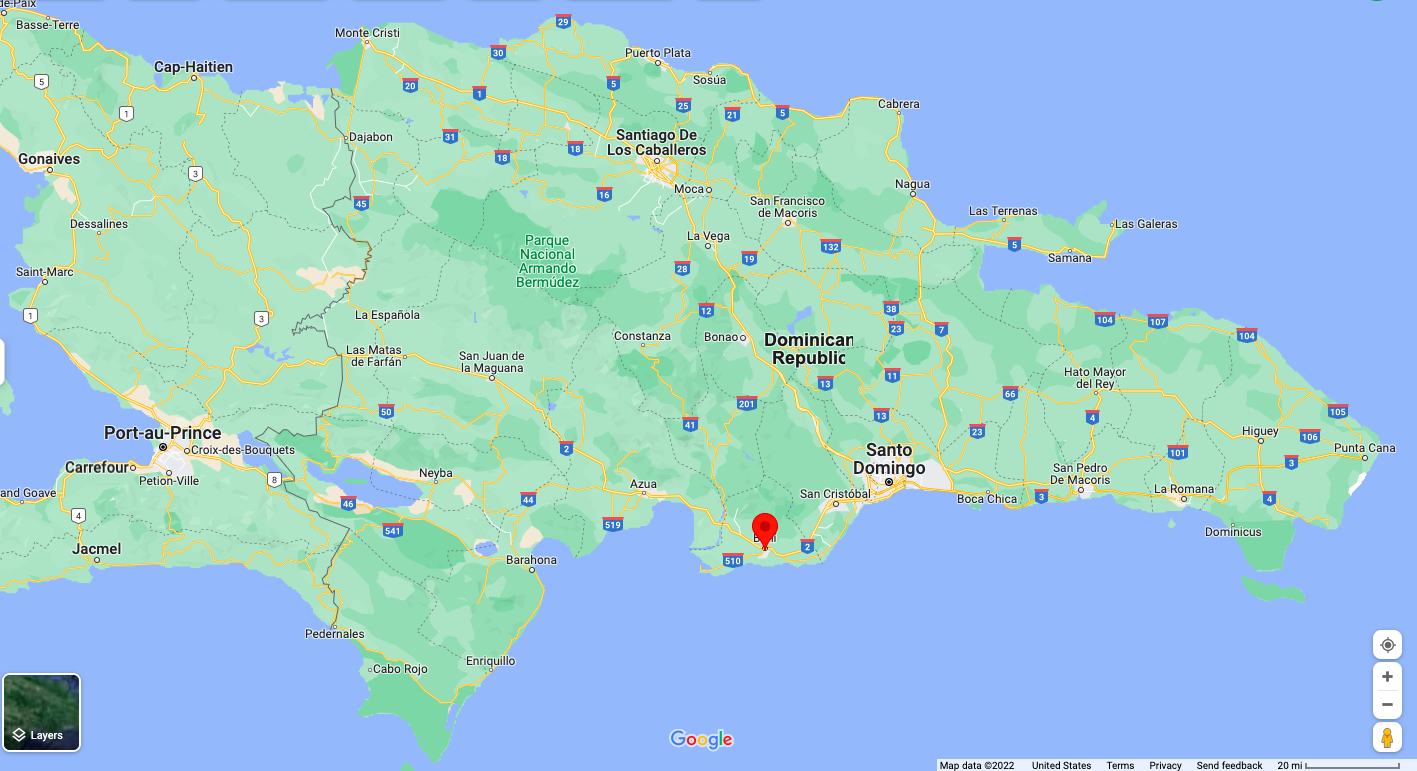
Never did I go to Bani. I hadn’t even heard of Bani, located 65 km west of Santo Domingo.
I should have made the trip to Bani, west of Santo Domingo back in 2007. If only I had known.
Fast forward to 2022. Now I know more about Bani. Lots of people from Bani have moved to the Boston area. They call themselves “Banilejos,” which means people who are far from their home of Bani. There’s even a Banilejo tee-shirt, and there used to be a Banilejo festival each summer in the Stony Brook section of Jamaica Plain.
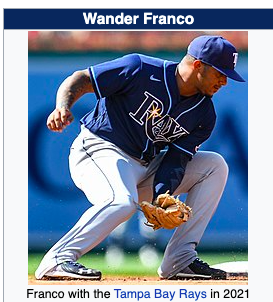
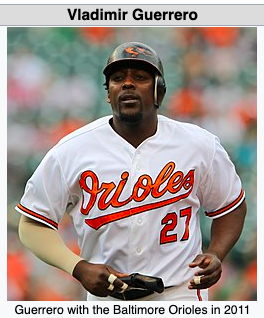
There are famous baseball players from Bani – Wander Franco, who plays for the Tampa Bay Rays, and the Hall of Famer Vladimir Guerrero Sr, who is from Nizao, just outside the city.
Maybe a future Hall of Famer? The Hall of Famer, who hails from just outside Bani
Anyway, yesterday I had lunch at Boston’s “Bani Restaraunt,” and wanted to write a review. This is my second food review, the first being of a tamales stand in Pasadena, California.
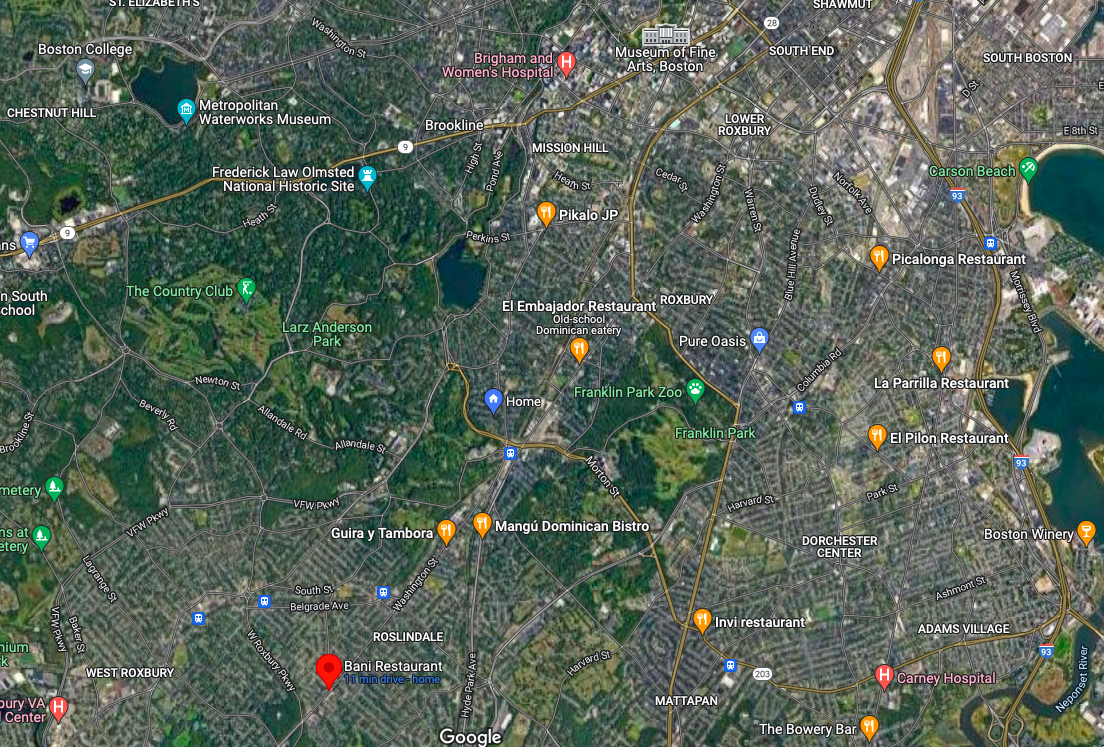
So Bani Restaraunt is a nice place. It’s located on Washington Street, a busy thoroughfare, not too far from central Roslindale (which most people call Rozzie). If you are at Forest Hills in Jamaica Plain, it’s a quick bus ride away. Inside, the atmosphere is quiet and peaceful. There are televisions but the volume is turned off. There are plants.
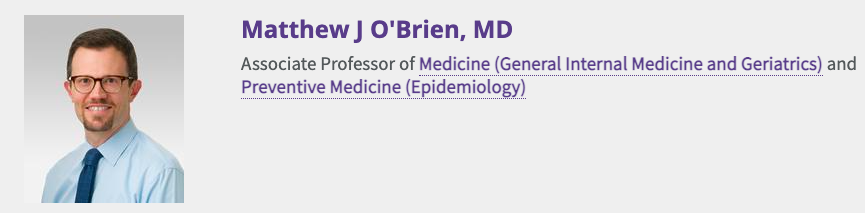
The proprietor had a few vegetarian options and served me lentejas (brown lentil soup) and berenjena (eggplant) with white rice. I asked for “poco arroz” (just a little rice) but my meal came out with a lot of rice (by my standards). The lentils were decent, although salty, and I had the sensation that they might have been canned. The eggplant was oily and pretty good. She offered several soft drinks and juices but I chose a water. The total was about $12. I thought about my friend Matt O’Brien’s research on prediabetes as I ate some of the rice.
Overall I’m glad I went to Bani Restaurant. Not so much because the food was life changing, but because it was a pleasant atmosphere and reminded me of my trip to the DR in 2007. And now I can tell my patients that I have been to Bani (restaurant). Maybe someday I’ll go back to the DR and go to the real Bani.
Bani Restaraunt, located in Roslindale, just southwest of Jamaica Plain, MASomeone far from their home of BaniPreventing most cases of diabetes – as simple as nutrition and exercise?
A television interview about the Banilejo festival
Thanks for reading my blog entry. If you enjoyed this post, please leave a reply below where it says “enter your comments here.” If you would like to be on my email list, please type in your email address on this website where it says “enter your email address.” Then, click the red button which says “Follow.” You will receive a message and after you click it, and you will receive my daily blog posts
Let’s back up a bit. Back in November 2021, the Emory authors published a paper, a pooled analysis of 2 prospective cohort studies that included 918 participants, on mental-stress induced myocardial ischemia.
Fast forward to last week. Dr. Lin’s letter argued that major depression is also an important psychological risk factor for coronary heart disease. He also stated that the Emory paper was unable to identify new-onset depression prior to cardiovascular events.
Potential mediators of mental-stress-induced myocardial ischemia or depression leading to heart disease include inflammation, dysregulation of autonomic function, and paradoxical vascoconstriction due to endothelial dysfunction.
In reply, the Emory authors agreed with Dr Lin that depression is a potentially important correlate of mental stress-induced myocardial ischemia. They attempted to rule out depression as a confounding factor, but it is possible that study participants who tested positive for ischemia with mental stress went on to develop more depression during follow-up, and that this new-onset depression was involved as a mechanism in their increased risk. However, this mechanism remains speculative.
The bottom line is we are learning more and more about the relationship between the mind and the body. It’s certainly a good idea to avoid depression if you can, because depression causes so much suffering on its own. But the issue of a relationship between mental health and heart disease deserves more study.
I’m interested in this for my patients. But I’m also want to know more about it because my father, Albert Lederer, died suddenly on October 4, 2020, presumably from a cardiac event. I wonder if it was due to conventional risk factors such as hypertension, hyperlipidemia, and vulnerable plaque rupture, or if some of the factors described by Drs. Lin et al might have played a role. COVID has been very difficult for the majority of us and we need to regain our mental health, irrespective of its role in the pathogenesis of cardiovascular disease.
Thanks for reading my blog entry. If you enjoyed this post, please leave a reply below where it says “enter your comments here.” If you would like to be on my email list, please type in your email address on this website where it says “enter your email address.” Then, click the red button which says “Follow.” You will receive a message and after you click it, and you will receive my daily blog posts
I just woke up from a wild dream and thought, why not write about it on my blog? As with most dreams, it’s hard to remember exactly what was going on, but I was in another city with my family, trying frantically to pack my bags and go to the airport. But the suitcases were overstuffed, and time was running out before the flight!
We must have been in some sort of motel, and there was a man doing housekeeping, and he showed me a fingernail that was on the floor, and asked if it was mine. I said it was not.
We had to get going or we were going to miss our flight, so I threw away some of my belongings in the trash and we took a taxi to the airport. I suppose we made it on the plane, and back home, although this home was not like the home I know. Several recent college graduates were with me, and I realized we needed to start a social movement. But first I needed to search outside my house – so the others went inside and I locked the door. I took the dog and and a flashlight and marched around, making sure there were no bad guys hiding in the shadows.
Eventually one of the others joined me, and we headed down to an underground parking garage, and I told him, “so here’s the plan. We are going to start a social movement, and an NGO. However, it’s impossible to say that it won’t spin off into a for-profit enterprise…”
And then I woke up. This was five minutes ago. If anyone has read Freud’s The Interpretation of Dreams, you can help me figure out what’s going on.
But what I was planning to write about this morning was on a completely different topic – advice to young doctors.
Match Day just happened, so the 4th year medical students have found out where they will be going for their residencies. And that means the third years are going to become 4th years, and 2nd are going to become 3rd years. Another generation of doctors is being created.
But it’s clear that America’s health care system is very troubled. It’s so inequitable, and focused on hospital-centric care, and most of the power is with the hospitals, insurance companies, and drug companies, not the doctors and nurses. There’s little appetite for systemic change in the United States for health equity, racial justice, community based primary care, and prevention.
And electronic medical records have completely transformed American medicine into a computer-based enterprise. When I did my primary care clinic at Logan Heights Health Center in San Diego from 2008-2011 we still used paper charts. Even during my infectious diseases fellowship at the Brigham from 2014-2015 we were using paper charts to a large extent (along with an old DOS based system called BICS). But now everything is digital, and while it has its benefits, it also has its drawbacks. We are glued to our screens, and our EMRs are often clunky, and we are frequently rushed.
I think the best description of the way forward is actually in a 2019 novel called Man’s 4th Best Hospital, by Samuel Shem. In it he skewers corporate medicine and calls for a new health care based on primary care and humanism. The central lesson Shem attempts to impart is that “isolation kills” – we must stick together and look after each other as we try to survive, heal people, and fix the system.
I think this is quite right. For the graduating medical students heading off to start their internships, for the students just starting their clinical clerkships, and for practicing doctors like me, we need to look after each other. We need to be members of the American Medical Association, state and local medical societies, hospital committees, the American Medical Student Association, and National Medical Association. We also need to join and lead transformative organizations such as Physicians for a National Health Program (PNHP).
Recently, I was recalling my 2004 white coat ceremony at the University of Pennsylvania School of Medicine in Philadelphia. I’m glad I became a doctor, although I’m saddened by the ways that the American medical system makes health care workers sick. I love seeing patients, sitting with them, listening to them, and I hope some day we will be able to organize for a better health care system, one where we aren’t glued to the computer. I truly believe we can get there, and create the humanistic medicine that we need. What do you think?
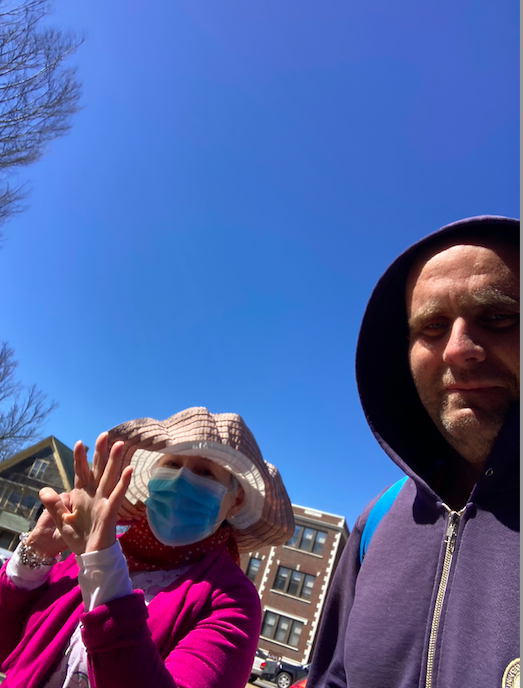
Walking with a coworker on a beautlful Boston day
Thanks for reading my blog entry. If you enjoyed this post, please leave a reply below where it says “enter your comments here.” If you would like to be on my email list, please type in your email address on this website where it says “enter your email address.” Then, click the red button which says “Follow.” You will receive a message and after you click it, and you will receive my daily blog posts
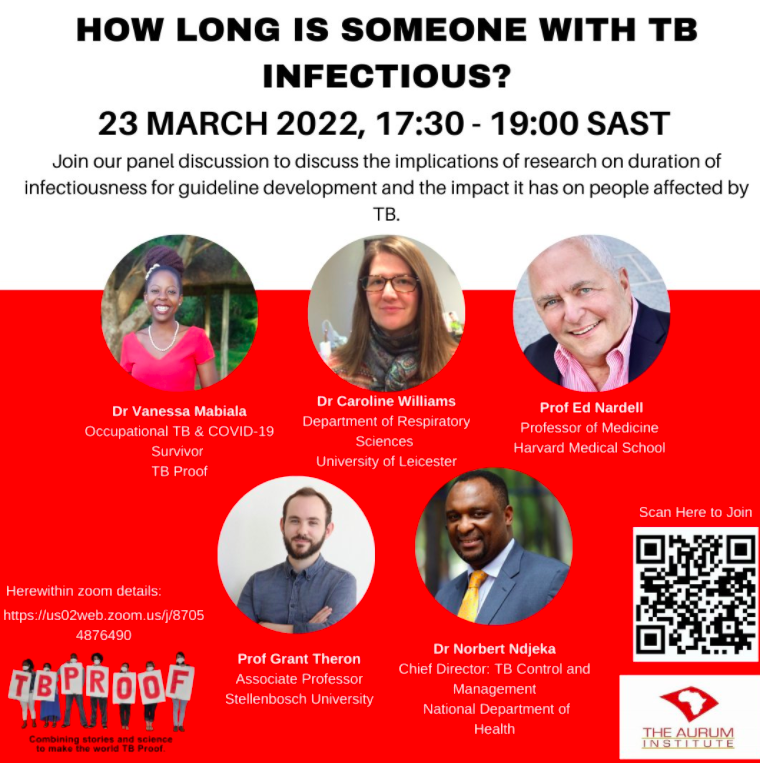
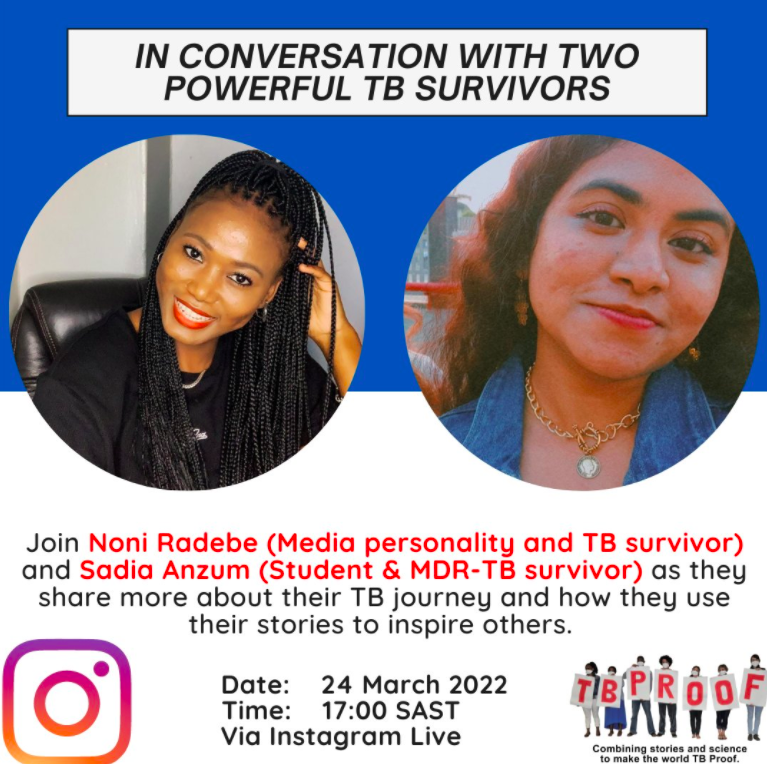
Tuberculosis is important because it is spread by the airborne route, and because of drug resistance which increases mortality. Yearly, approximately 10 million people fall ill with TB, and 1.5 million die from the disease. These numbers may be going up because of COVID and disrupted health systems. This Thursday, March 24, is World TB Day, and I wanted to share a few activities happening around the world. I’ve converted the times to EST because I live in Boston.
Here in Boston there apparently is a Tufts World TB Day research day but I don’t have the link.
As Dr. Madhu Pai and colleagues from the World Health Organization wrote recently,
We believe world leaders should commit to vaccinating people globally to help end the Covid-19 pandemic. They should also reaffirm their commitment to ending the tuberculosis epidemic, work harder to mitigate the effects of the pandemic, and address the social, environmental, and economic determinants of tuberculosis infection and mortality.
We can defeat tuberculosis but we must work harder and be tougher mentally. It would require more funding and better coordination with country Ministries of Health and the World Health Organization.
Thanks for reading my blog entry. If you enjoyed this post, please leave a reply below where it says “enter your comments here.” If you would like to be on my email list, please type in your email address on this website where it says “enter your email address.” Then, click the red button which says “Follow.” You will receive a message and after you click it, and you will receive my daily blog posts
Despite the devastation in Ukraine, the possibility of World War III and nuclear weapons being used, and violence globally (including a recent shooting in our neighborhood in Boston), I can say one thing for sure – it is spring.
It’s been a long hard winter, with stress from the Omicron surge, but winter is over.
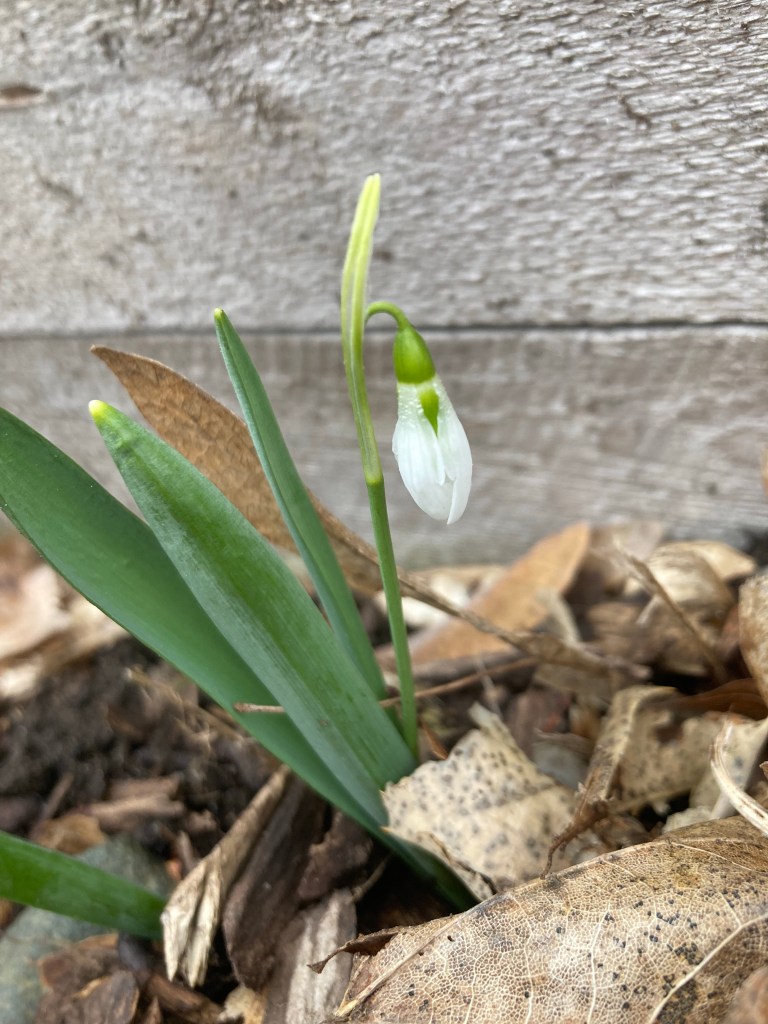
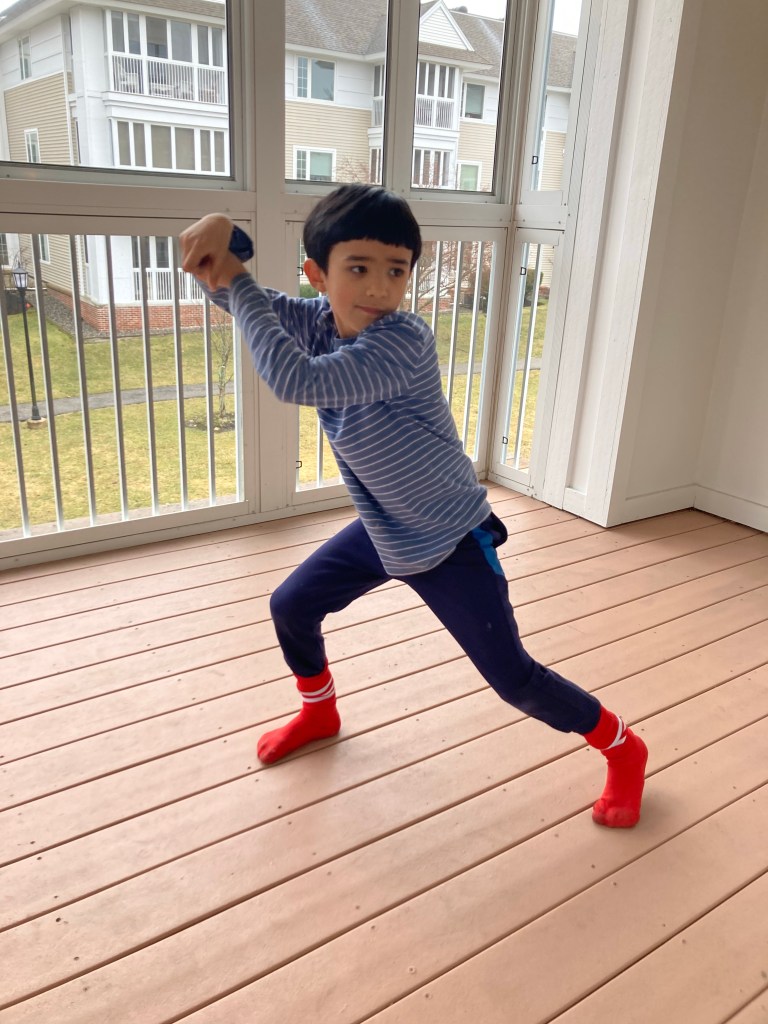
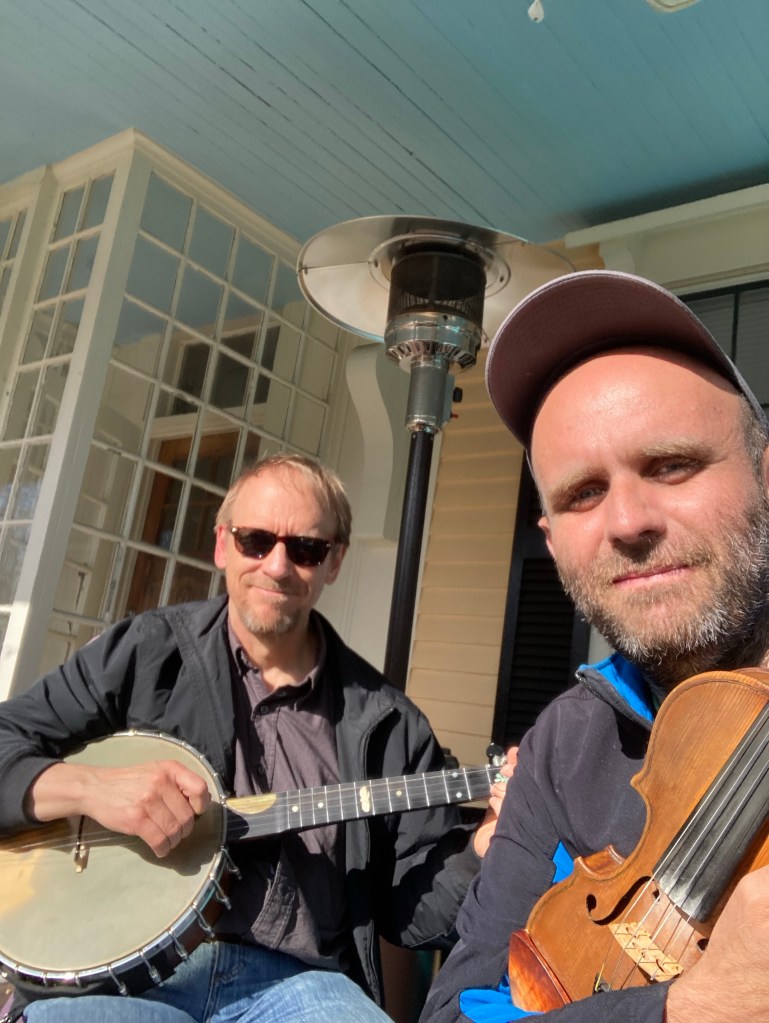
We have flowers to savor. Baby kale have sprouted. They’re starting up little league soon. And we played old-time music on our friends’ porch in West Roxbury yesterday.
Let’s not take this moment for granted.
Thanks for reading my blog entry. If you enjoyed this post, please leave a reply below where it says “enter your comments here.” If you would like to be on my email list, please type in your email address on this website where it says “enter your email address.” Then, click the red button which says “Follow.” You will receive a message and after you click it, and you will receive my daily blog posts
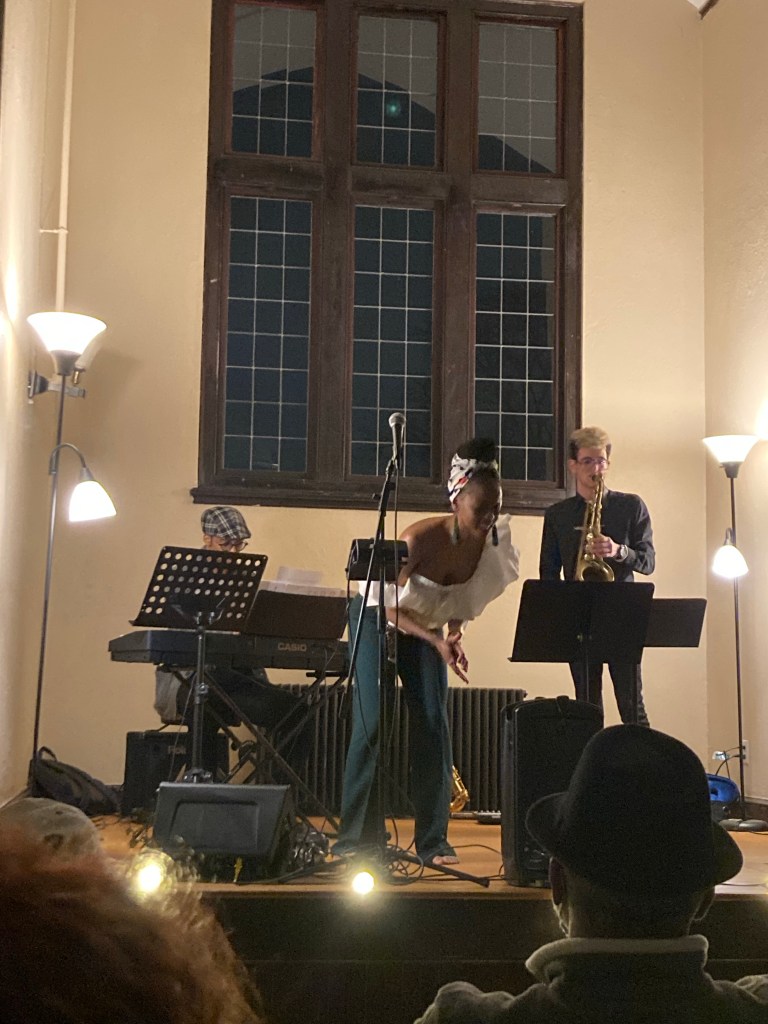
Last night I attended a delightful concert in Dorchester by the jazz singer Naledi Masilo. She is originally from Johannesburg and sang in English, Shona, and, I believe, isiZulu and Sesotho. A graduate of the New England Conservatory of Music, she was backed up on piano by Kevin Harris and on saxophone/flute by Shahar Amdor. It was a powerful show, from a mournful/ wailing introduction to a rousing singalong. You can follow her on social media.
Naledi Masilo on stage
Thanks for reading my blog entry. If you enjoyed this post, please leave a reply below where it says “enter your comments here.” If you would like to be on my email list, please type in your email address on this website where it says “enter your email address.” Then, click the red button which says “Follow.” You will receive a message and after you click it, and you will receive my daily blog posts
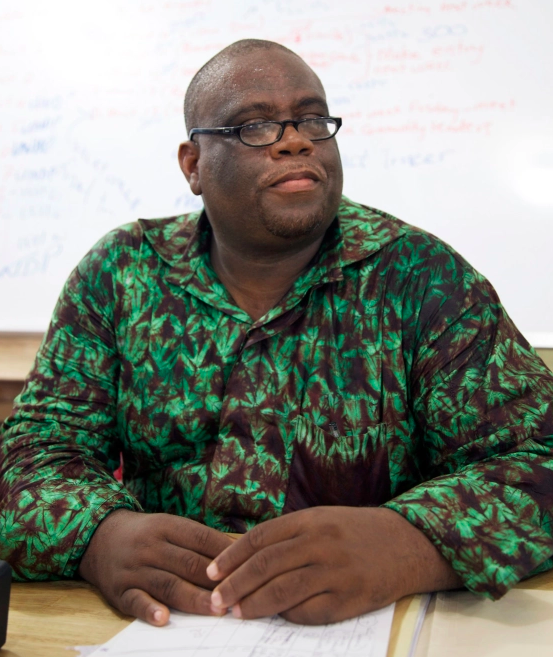
Yesterday, I was pleased to speak via WhatsApp with Dr. Mosoka Fallah. He is currently based in Addis Ababa, Ethiopia where he works for the Africa Center for Disease of the African Union leading a technical team that supports Covid-19 vaccine rollout to African countries.
His NGO, Refuge Place International, was started while he was a PhD student at the University of Kentucky. They built clinics in poor urban slums and isolated rural communities in Liberia to help the poor and vulnerble. They are also trying to start similar work in Sierra Leone.
Dr. Fallah was born in Liberia and received his bachelor’s degree in his home country and a master’s degree from Kent State University. After his PhD, he received a master’s in public health from Harvard.
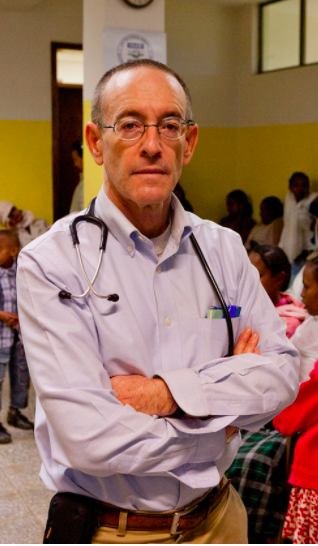
I am also interested in Dr. Fallah’s work in Ethiopia because I spent a bit of time in Addis Ababa in 2011 shadowing Dr. Rick Hodes, who has lived in the country for decades. Dr. Hodes’ approach, truly being invested in the health of the community, was inspirational.
Dr. Rick hodes
Dr. Fallah has agreed to help me with a future blog post, including sharing some pictures of his work. In the meantime, you can follow him on Twitter and Linkedin.
Thanks for reading my blog entry. If you enjoyed this post, please leave a reply below where it says “enter your comments here.” If you would like to be on my email list, please type in your email address on this website where it says “enter your email address.” Then, click the red button which says “Follow.” You will receive a message and after you click it, and you will receive my daily blog posts.
Vince and his co-authors demonstrated that CBCT is a novel and feasible non-medication-based intervention that could reduce inflammation and psychological stress in people living with HIV.
Compassion can actually blunt the aging process, in people with (and without) HIV! So besides outdoor exercise, nutrition, music/art/dance, and avoiding cigarettes, drugs, and alcohol, each of us could optimize our health by taking a CBCT course. We can reduce our stress levels and we can heal.
Thanks for reading my blog entry. If you enjoyed this post, please leave a reply below where it says “enter your comments here.” If you would like to be on my email list, please type in your email address on this website where it says “enter your email address.” Then, click the red button which says “Follow.” You will receive a message and after you click it, and you will receive my daily blog posts.
Medical science is constantly evolving. I remember studying hemophilia A during my first year at the University of Pennsylvania School of Medicine in 2004. The treatments we learned about were primitive – factor transfusions. Eighteen years later (!), the New England Journal of Medicine has published a new article, Gene Therapy for Hemophilia A – clearly science is advancing.
Gene therapy! That caught my attention, probably because of the Jesse Geslinger case. Geslinger was the first person publicly identified as having died in a clinical trial for gene therapy, in 1999, also at Penn. He had suffered from ornithine transcarbamylase deficiency, and there were ethical lapses in the trial.
Anyway, in this new study, which was funded by BioMarin Pharmaceutical, patients with severe hemophilia A received valoctocogene roxaparvovec treatment. This increased endogenous factor VIII production and reduced bleeding.
Medical science will continue to progress, and we must make sure trials are always conducted ethically.
Spring is near
Thanks for reading my blog entry. If you enjoyed this post, please leave a reply below where it says “enter your comments here.” If you would like to be on my email list, please type in your email address on this website where it says “enter your email address.” Then, click the red button which says “Follow.” You will receive a message and after you click it, and you will receive my daily blog posts.






 Philip A. Lederer