Redo college intro science?

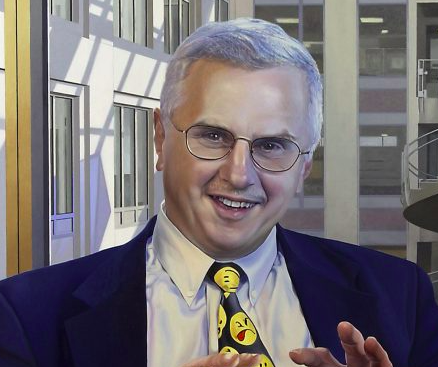
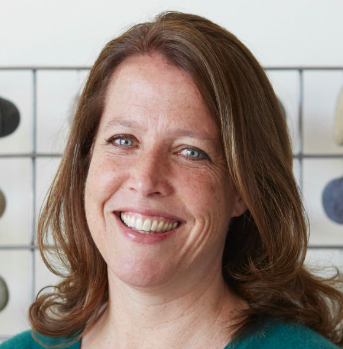
I recently read an editorial in Science Magazine by Drs. David Asai, Bruce Alberts, and Janet Coffey which argued that college introductory biology courses need to be revamped. While I suspect they are correct, their solution to the problem of a shortage of citizens who understand and respect scientific evidence seemed incomplete.

Why focus on college introductory college biology courses? The authors state because in the United States, nearly a million students enroll in such a course yearly.

But what about the 50.7 million students in American public schools each year from grades K-12? To me, it seems like we need to also focus on science education from kindergarten to high school graduation. What about science curriculum, syllabi, and resources in our nation’s public schools? What about supporting public school teachers? What about ensuring small class sizes and safe schools where students can learn?

If we can revamp pedagogies for science education from K-12, we might have a chance to get over the inertia that is so common in American public schools. Then, students graduating from U.S. high schools might actually be prepared to take a high-level college intro science course.

To do this, America would need a “Science New Deal” led by President Biden. Think of President Kennedy’s moonshot effort in 1962.

The United States has no problem spending trillions of dollars on the military (including nuclear weapons) and wasteful health care. But what about science education for our public schools? Don’t our kids deserve better? Will we speak out or will we stay silent?

What do you think?
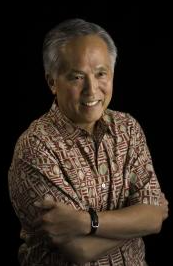
David Asai, PhD
Bruce Alberts, PhD
Janet Coffey, PhD

Thanks for reading my blog entry. If you enjoyed this post, please leave a reply below where it says “enter your comments here.” If you would like to be on my email list, please type in your email address on this website where it says “enter your email address.” Then, click the red button which says “Follow.” You will receive a message and after you click it, and you will receive my daily blog posts
Thank you, Maurice!

I had just passed mile 17 and was starting to fade. The hills were taking their toll and I slowed to a walk, knees aching.

Suddenly, I heard pounding footsteps.

“Hey man, come on, you got this,” a tall runner exclaimed. I started jogging again, trying to keep up with him, his powerful energy.

“I’ve never ran this far before,” I said between breaths. “I did a half-marathon, but this feels a lot longer.”

“What’s your name?”

“Phil”

“I’m Maurice. Listen, Phil, you can slow down, but don’t quit!”

“Ok,” I responded, my head a little higher.

“And I’ll see you at the finish line, Phil!” He gave me a fist bump. “You got this.”

“Ok,” I called out.

“You can slow down, but don’t quit!” He jetted off, and his voice echoed in my mind.

Maurice’s encouragement was exactly what I needed at that moment.

I’m not going to say that the last 3 miles were easy. I jogged, then walked backwards a bit to rest my leg muscles, then ran again. But the last mile I ran harder, and true to his word, Maurice reappeared on the sideline as I approached the finish line.

He shouted words of encouragement, jumped up and down, and gave me another fist bump. “Great job, Phil,” he yelled.

I sprinted in, arms in the air, like I had just won the Boston Marathon.

What did I learn from this encounter with a total stranger?

In life, we need each other. Even something seemingly individual, like a 20 mile race, is actually a group event. We need helpers.

Thank you Maurice!

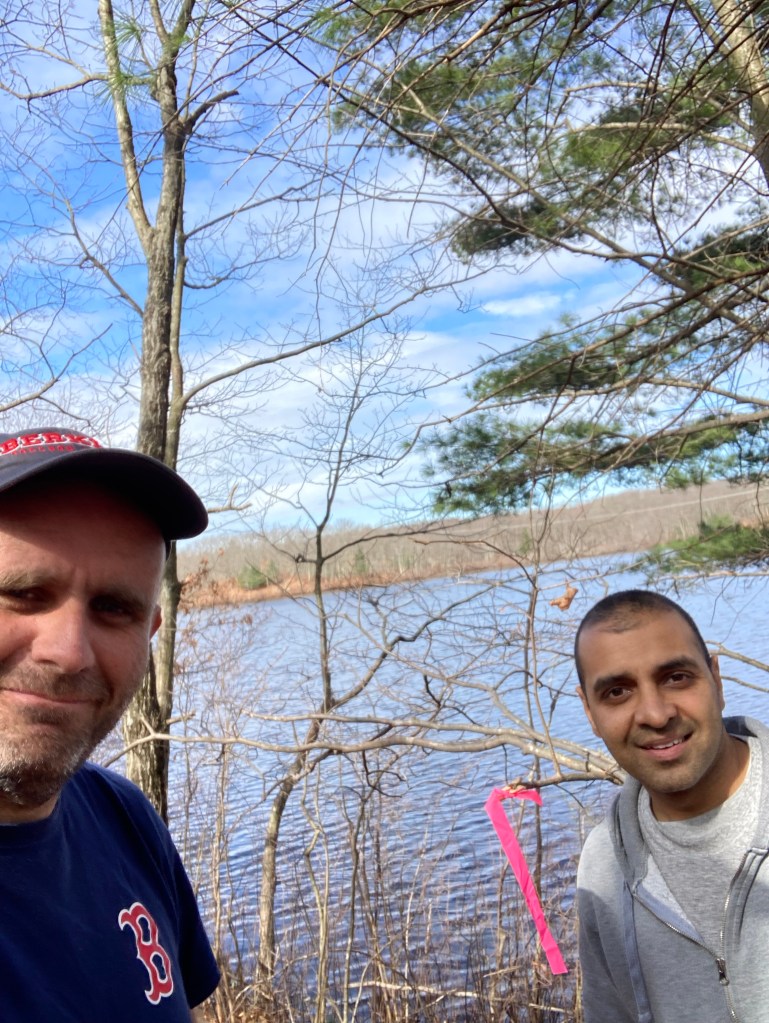
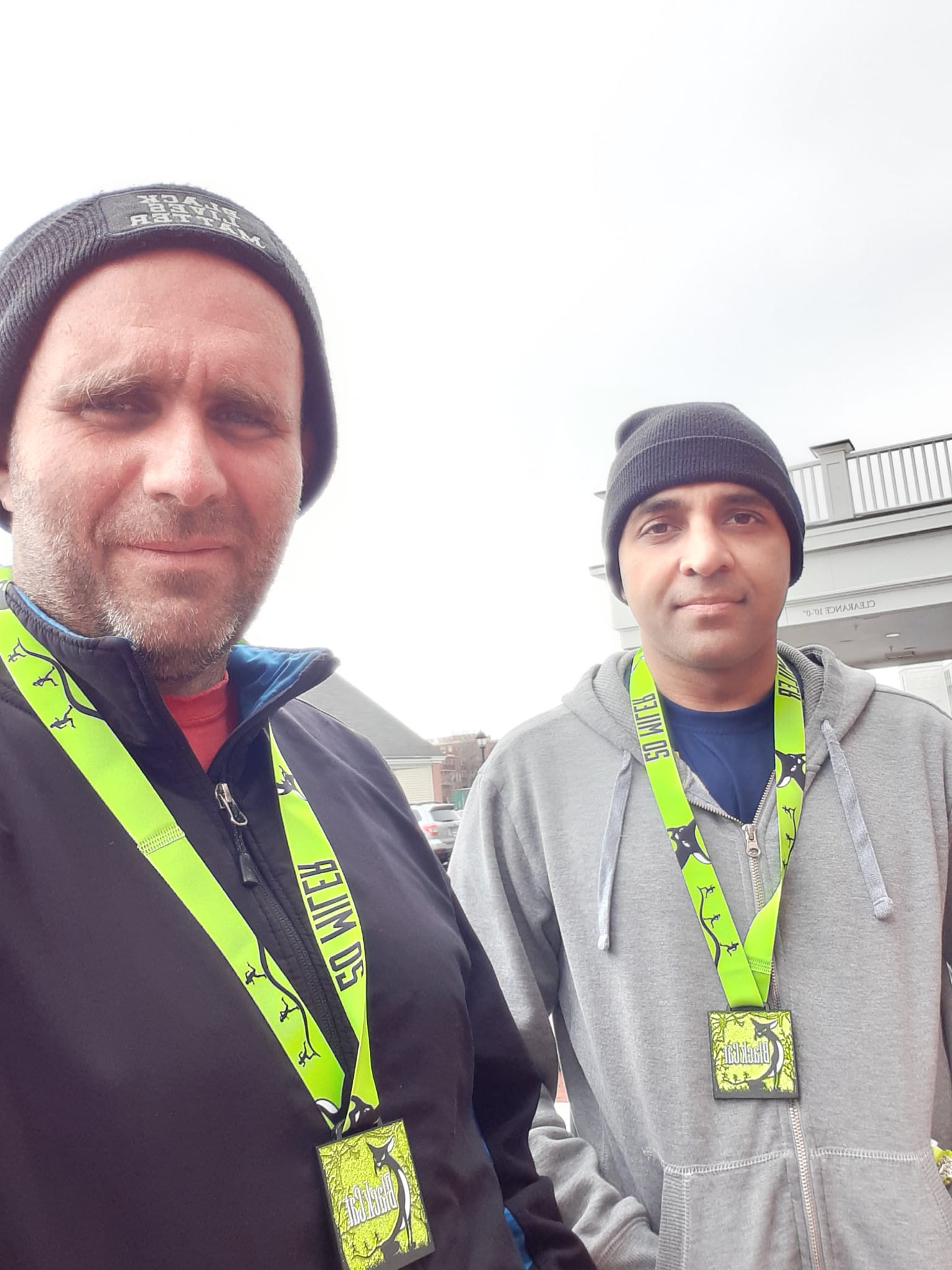
Yesterday, after the 20 mile race and a bit of rest, standing with my friend Peeyush Bhardwaj. I never ran that far before.

Thanks for reading my blog entry. If you enjoyed this post, please leave a reply below where it says “enter your comments here.” If you would like to be on my email list, please type in your email address on this website where it says “enter your email address.” Then, click the red button which says “Follow.” You will receive a message and after you click it, and you will receive my daily blog posts

Predicting airborne infection risk

I’m pleased that our research study, “Predicting airborne infection risk: Association between personal ambient carbon dioxide (CO2) level monitoring and incidence of tuberculosis infection in South African health workers,” was recently published in the journal Clinical Infectious Diseases.

The central idea of our paper is that health workers face high occupational TB risk. Increasing CO2 levels (indicative of poor ventilation and/or high occupancy) were associated with higher likelihood of health worker TB infection. Personal ambient CO2 monitoring may help target interventions to decrease TB transmission in healthcare facilities. It may also help health workers self-monitor occupational risk and has implications for other airborne infections including COVID-19.

I’m biased, but I think this area of research, personal ambient CO2 monitoring, should be given a priority for more funding. TB is still here, along with COVID-19, and new airborne infections are certain to emerge in the coming years. Personal CO2 monitoring is a way for health workers and the general public to potentially protect themselves.

Thanks to the co-authors, Ruvandhi Nathavitharana, Hridesh Mishra, Amanda Sullivan, Shelley Hurwitz, Jack Meintjes, Edward Nardell, and Grant Theron. I’d also like to give a particular thanks to Hridesh for his hard work on the technical aspects of the study, Ed for his vision and leadership, and Ruvandhi and Grant for their persistence and efforts taking this study across the finish line.

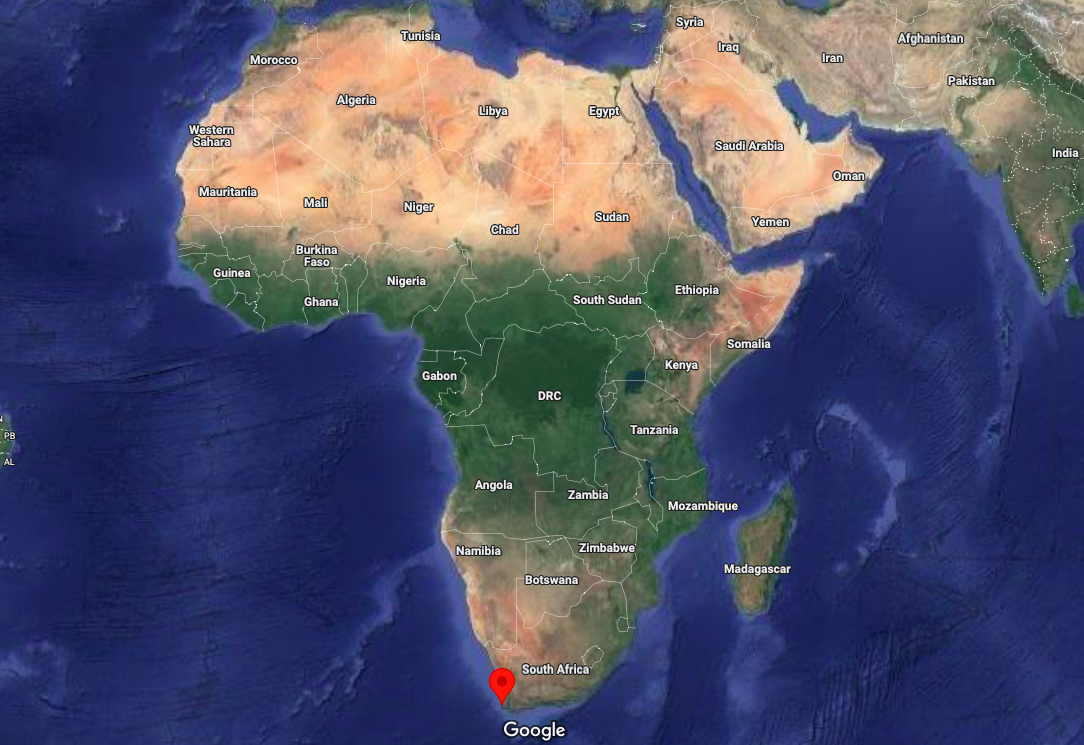
The research study took place in Cape Town, South Africa. The research is applicable globally.

Thanks for reading my blog entry. If you enjoyed this post, please leave a reply below where it says “enter your comments here.” If you would like to be on my email list, please type in your email address on this website where it says “enter your email address.” Then, click the red button which says “Follow.” You will receive a message and after you click it, and you will receive my daily blog posts
Helen Conrad Davies, celebrated scientist, ‘singing professor’ of microbiology, dies at 97

Helen Conrad Davies, 97, an award-winning scientist and professor emeritus of microbiology at the University of Pennsylvania, a vocal advocate for racial equality and women’s rights, and a revered mentor who sang to her students about infectious diseases, died March 23, of respiratory failure at the Hospital of the University of Pennsylvania.

She was one of the most memorable professors I had during medical school at Penn, because of her unique approach to teaching. In 2004-2005, she really brought our microbiology and infectious diseases courses to life.

To help students remember complex concepts, she created amusing lyrics that explained the basics of infectious diseases, set them to tunes of popular songs, and belted them out in class.

Thanks Dr Davies, for your creativity and passion.

Dr Davies

Thanks for reading my blog entry. If you enjoyed this post, please leave a reply below where it says “enter your comments here.” If you would like to be on my email list, please type in your email address on this website where it says “enter your email address.” Then, click the red button which says “Follow.” You will receive a message and after you click it, and you will receive my daily blog posts
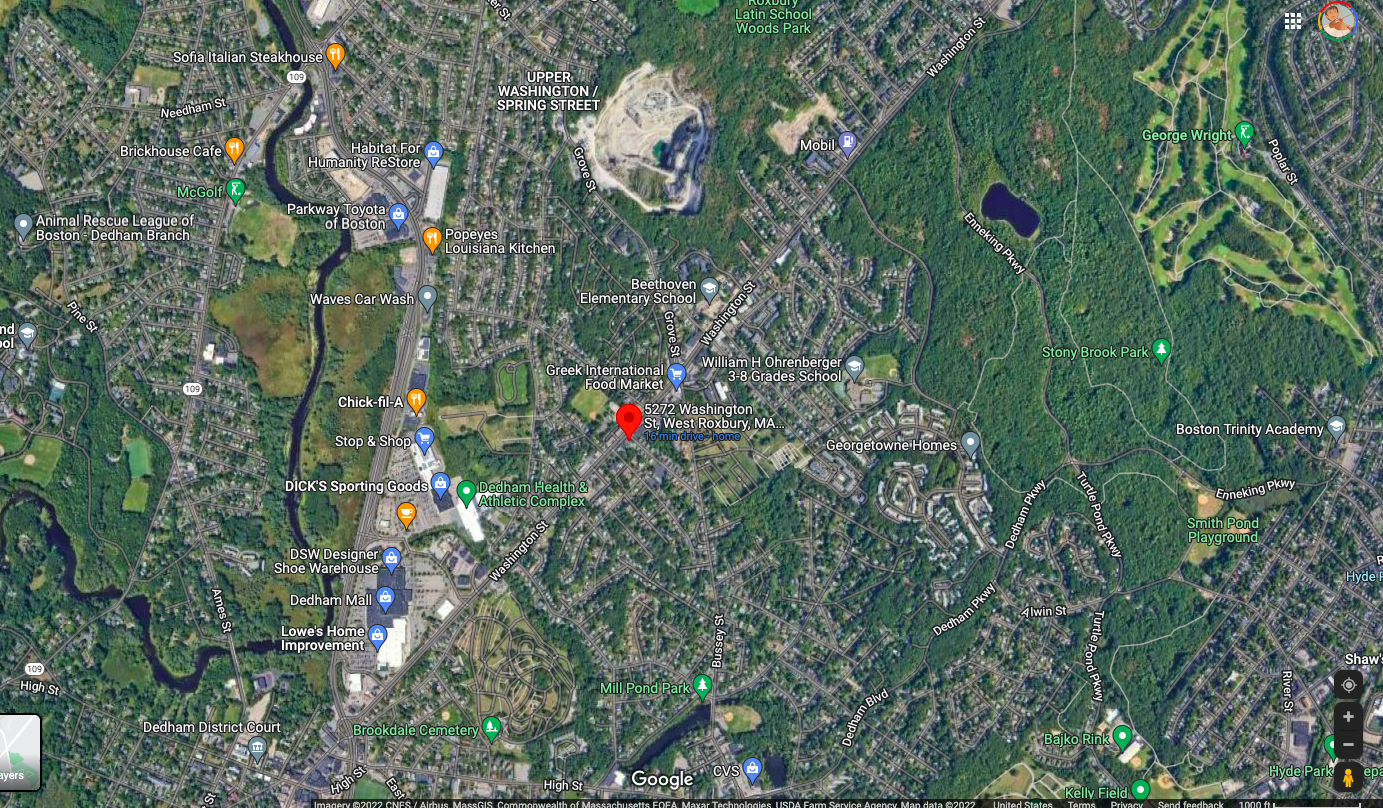
Los Antojitos

Yesterday I enjoyed a veggie burrito and freshly squeezed orange juice at Los Antojitos, which is located on the corner of Washington Street and Birchwood Street in West Roxbury, MA. The restaurant, which could be described as a bit of a hole in the wall, had a nice atmosphere. There were only 2 tables and 3 stools. The television was turned off, and instead the restaurant had a Top Tech Audio Karaoke machine. I was ready to sing a bolero, but decided to eat instead.

The veggie burrito, made with fresh green peppers and black beans and salsa, was fine, although I didn’t really need white rice inside it. The highlight of the meal was the orange juice. First I had considered horchata (made from white rice and sugar), marañon (cashew fruit juice), maracuya (passion fruit), or la cascada uva uva (grape soda). But when I saw the machine that would press the oranges, I knew how to quench my thirst.

As I ate, I recalled sitting in small restaurants in Santiago Atitlan, Guatemala, and Tijuana, Mexico years ago, just relaxing an afternoon away. And I thought about the global impact of the food I atea. My main regret was I didn’t ask for a plate – and instead got my meal delivered in aluminum foil and a plastic cup. They provided an “eco-friendly straw” for the orange juice but I’m trying to reduce my trash impact

Finally, I was wishing restaurants gave more data on their menus, along with prices. How come we don’t see the number of calories, amount of salt, and carbohydrate, on menu along with the price? More and more people are trying to control what they can, which is nutrition and health.

Maintaining caloric balance over time is important to maintaining healthy weight. Overeating leading to obesity is the single most important dietary factor associated with poor health outcomes. It is associated with premature death as well as increased incidence of cardiovascular disease, diabetes, and high blood pressure. These health disparities are pronounced in minority populations. But we can reclaim our health and wellness through the food we eat, the ways we exercise, and how we reduce stress.

If you make it over to Los Antojitos, let me know what you think of their offerings!

Thanks for reading my blog entry. If you enjoyed this post, please leave a reply below where it says “enter your comments here.” If you would like to be on my email list, please type in your email address on this website where it says “enter your email address.” Then, click the red button which says “Follow.” You will receive a message and after you click it, and you will receive my daily blog posts
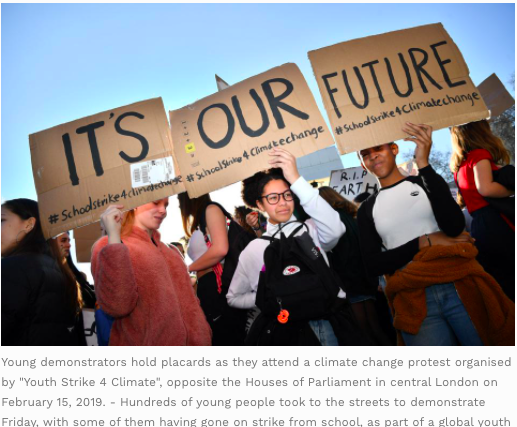
Global Health is Broken, But Young People Plan to Repair It

Today I wanted to respond to Dr. Madhu Pai’s recent post on Forbes, Global Health is Broken, But Young People Plan to Repair It. In the article, he amplifies the voices of 24 young people from around the world regarding climate change, pandemics, and other global health crises, and the ways leaders are failing us. (For disclosure, I have been an admirer of Dr. Pai for over a decade and he has supported my tuberculosis work).

I am very happy that young people are motivated to reform global health. Throughout history, young people have brought a lot of energy to social change movements. For one recent example, take the civil rights movement. Many of the leaders were young – people like Bob Moses, age 26 when he traveled to Mississippi with SNCC, and others. I would also point out, though, that many of the change agents were older, and experienced – people like Rosa Parks, age 42 when she was arrested in Montgomery, and Fannie Lou Hamer, age 46 when she became a field secretary for SNCC. So I would say that, rather than focusing on young people as the ones who will “save us,” it should be a movement of all people, anyone who is willing to organize and put in hard work. We do need to turn out young people who have hope, vision, and energy, and the desire to organize.

The other thing I wanted to point out is the focus on global health and issues of climate change, pandemics, Black Lives Matter, etc. I am entirely on board with these issues as an advocate. But I did also like in Dr. Pai’s article that war crimes was mentioned, because one gap in his post was about nuclear weapons. Young people could work really hard on climate change and pandemics and it wouldn’t matter if nuclear weapons are intentionally or accidentally used. There is a group of advocates who for decades have been attempting to get rid of these weapons. Within the medical community, the group is International Physicians for the Prevention of Nuclear War, and its US affiliate is Physicians for Social Responsibility (of which I am a member).

So yes, let’s work on decolonizing global health in our universities and institutions, reforming and funding adequately WHO, and stopping the burning of fossil fuels. But we also need students to get on board with the nuclear weapons abolition movement. And at times they have been, for example in the 1980s, there were lots of young people involved with the nuclear freeze movement.

So thank you to Dr. Pai for a provocative, hopeful essay, sharing the voices of young scholars globally. And let’s get to work.

Thanks for reading my blog entry. If you enjoyed this post, please leave a reply below where it says “enter your comments here.” If you would like to be on my email list, please type in your email address on this website where it says “enter your email address.” Then, click the red button which says “Follow.” You will receive a message and after you click it, and you will receive my daily blog posts
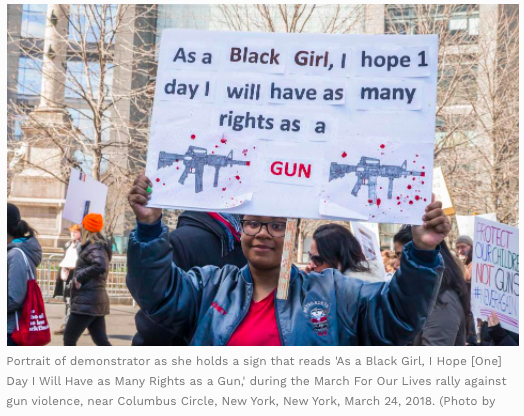
A Randomized Trial of 21 Days of Loving Kindness Meditation for Stress Reduction

In modern society, we are stressed out, and stress can make us sick.

Many people are undergoing challenging health journeys, consisting of pain, anxiety, and fear. Loving Kindness Meditation (LKM) is a systemized mind-body approach developed to increase loving acceptance and has previously been reported to increase resilience in the face of adversity.

In this randomized trial from the University of Minnesota, an immediate LKM group showed improvements in stress, self-compassion, and social connectedness compared with a deferred LKM control group. Future research is needed, but the results are suggestive enough that I think doctors could begin teaching LKM to their patients now. What do you think?

Thanks for reading my blog entry. If you enjoyed this post, please leave a reply below where it says “enter your comments here.” If you would like to be on my email list, please type in your email address on this website where it says “enter your email address.” Then, click the red button which says “Follow.” You will receive a message and after you click it, and you will receive my daily blog posts
Fear on the Softball Field

Growing up, I wasn’t much of a baseball or softball player. Sure I enjoyed playing catch with my dad. And I loved going to Tiger Stadium to watch Cecil Fielder, Lou Whitaker, and Alan Trammel. But I never was on a little league or farm ball team.

Fast forward 30 years. My son is a baseball fanatic, and I find myself playing on a neighborhood softball team. Meanwhile, he is getting excited about his own spring training. Take me out to the ballgame.

I just have one problem – I’m afraid of baseball! As an infectious diseases doctor, I’ve seen everything go wrong. Infected skull fractures, ankle surgeries, etc. I imagine the ball rocketing off the bat and hitting myself or Joe in the head. Do they have adequate protective equipment in baseball?

So I decided to take a look at the data and found this epidemiological study from the University of Pennsylvania.

The bottom line is there is a significant burden of injuries from baseball and softball. I am vindicated! Youth leagues should look harder at their protective equipment and other practices.

I think it’s important to examine everything from a public health perspective. It doesn’t matter if it’s baseball, firearms, nuclear weapons, soda, cigarettes, alcohol, cars, etc. We can figure out ways to reduce the risk of premature injury and death, but we have to be committed to prevention.

So where does that leave me with baseball? I’m not going to go overboard but I think I am going to look for a softball helmet. But on the other hand, there is a major health benefit to playing a sport outside, and serious injuries remain rare. Any thoughts?

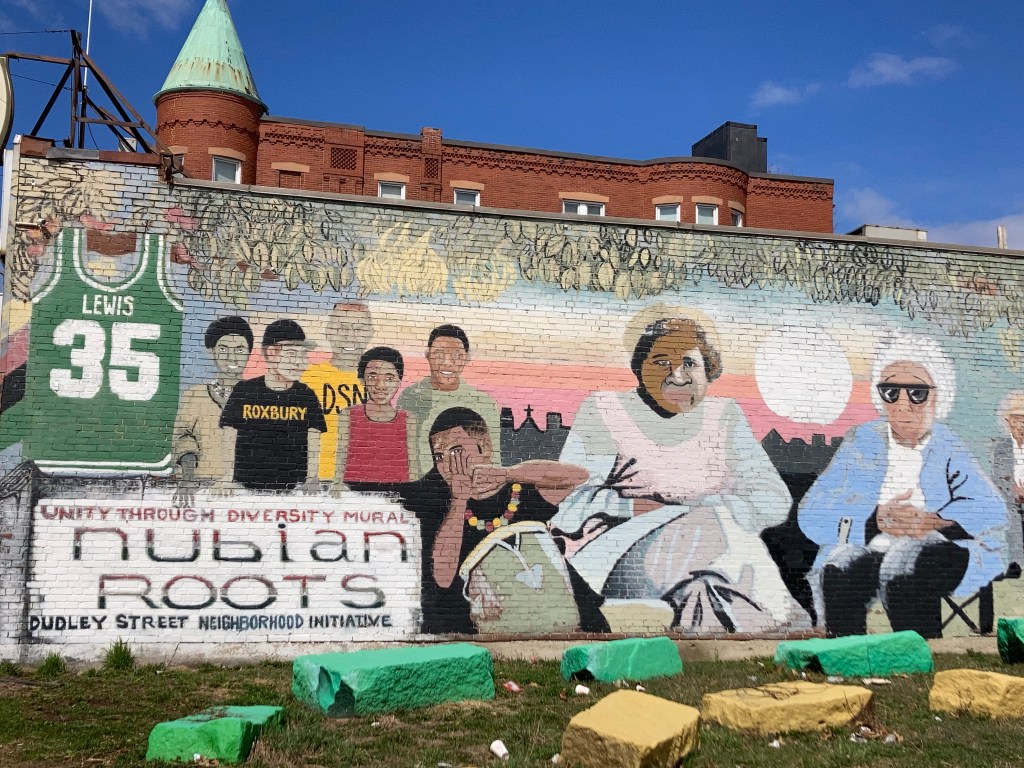
Nubian Square, Boston

Thanks for reading my blog entry. If you enjoyed this post, please leave a reply below where it says “enter your comments here.” If you would like to be on my email list, please type in your email address on this website where it says “enter your email address.” Then, click the red button which says “Follow.” You will receive a message and after you click it, and you will receive my daily blog posts

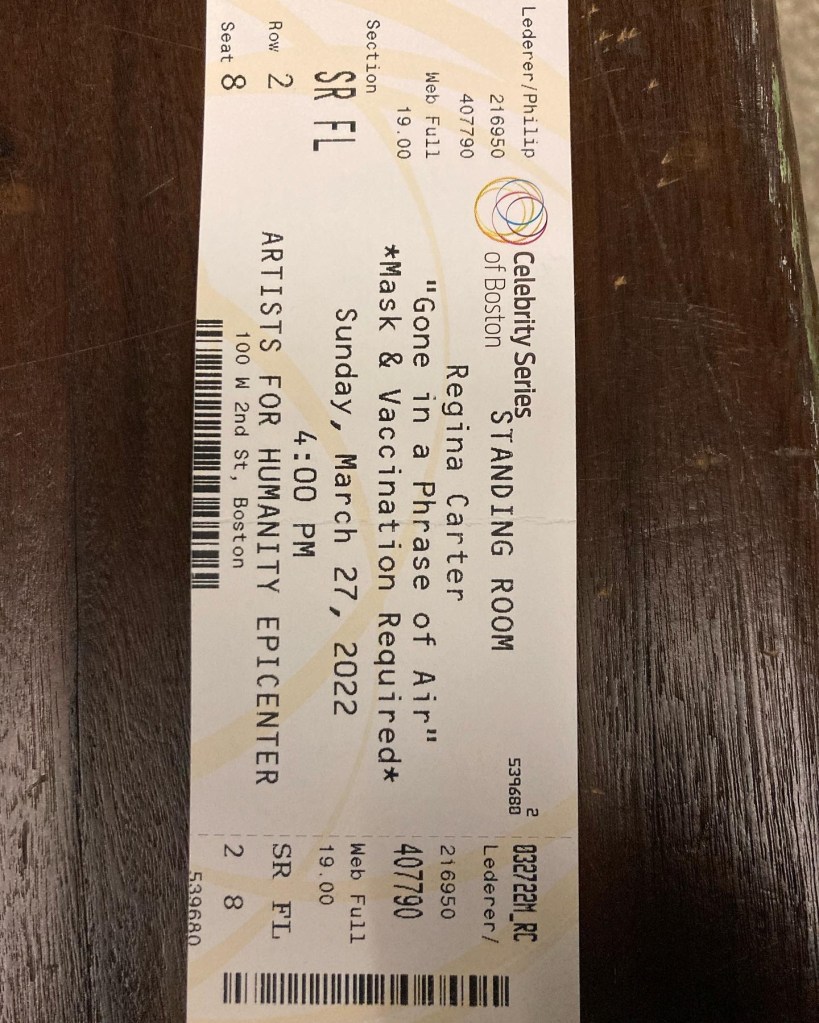
Regina Carter in Boston

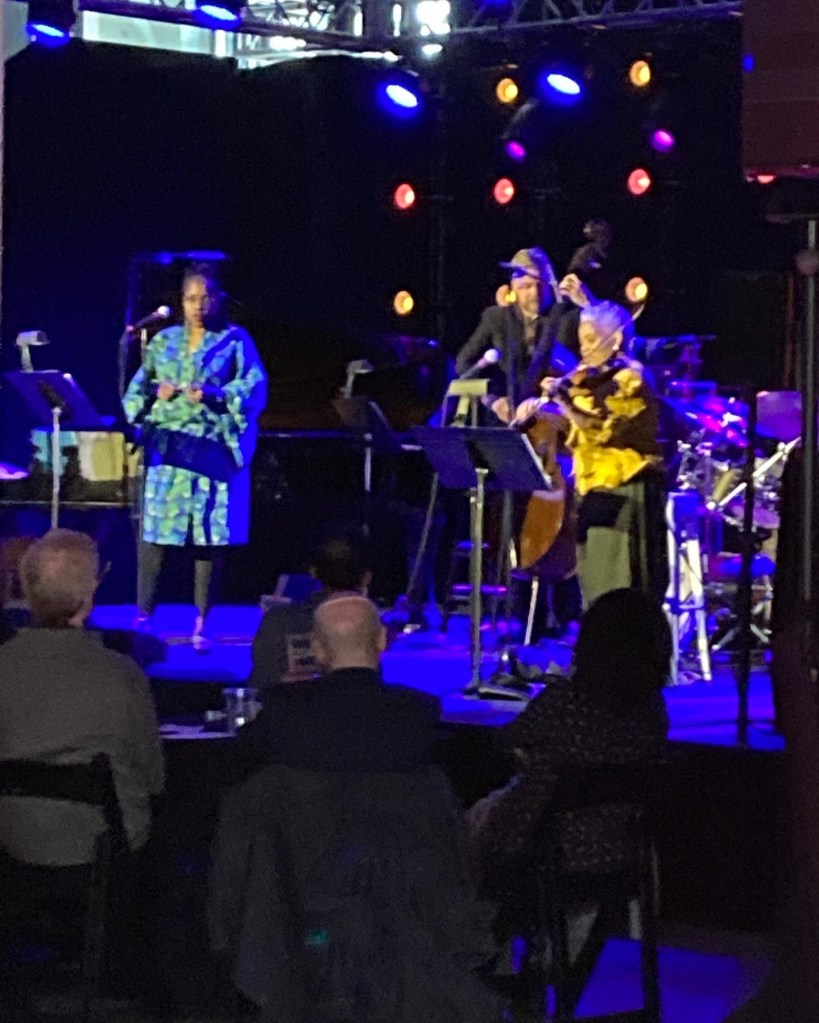
Yesterday was another wonderful musical performance here in Massachusetts, this time the jazz violinist Regina Carter. The show was held at Artist’s for Humanity in South Boston. Carter and her 5-piece band held the audience’s rapt attention with their music, but also their poetic interludes about housing, gentrification, and displacement of Black/Brown communities from American cities.

Carter, age 55, was born in Detroit where she studied violin via the Suzuki method (I used the same technique growing up). She remains connected to Michigan, and her message, about community, race, and preserving neighborhoods, was powerful.

Carter and her band
Music-art

Thanks for reading my blog entry. If you enjoyed this post, please leave a reply below where it says “enter your comments here.” If you would like to be on my email list, please type in your email address on this website where it says “enter your email address.” Then, click the red button which says “Follow.” You will receive a message and after you click it, and you will receive my daily blog posts
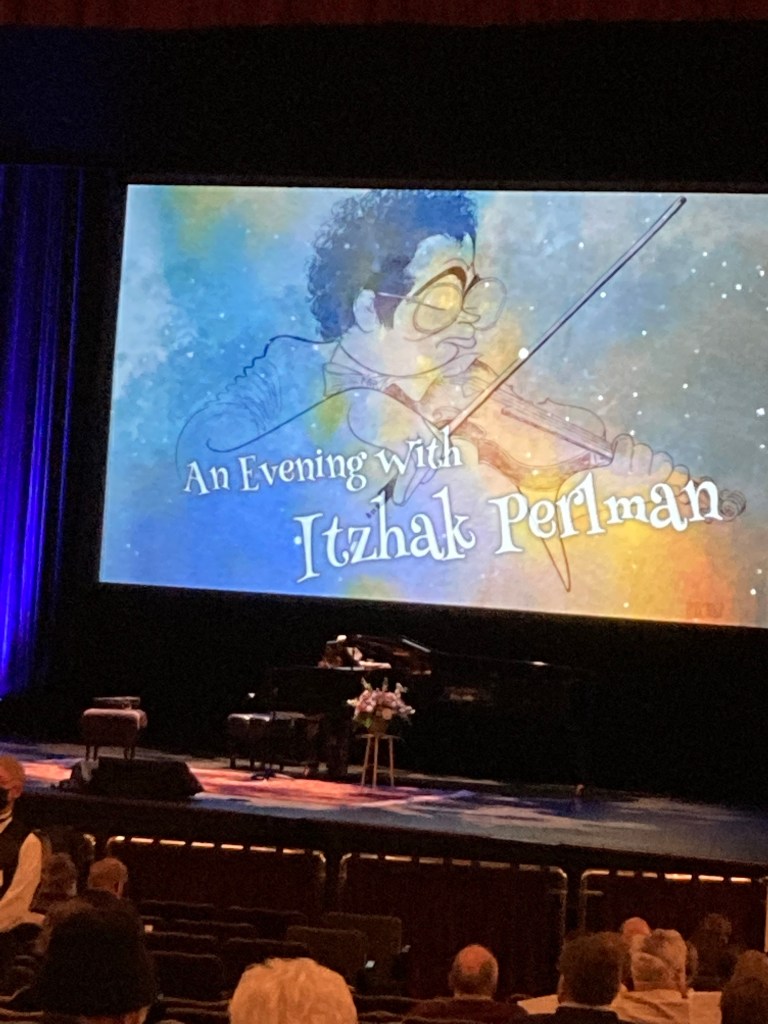
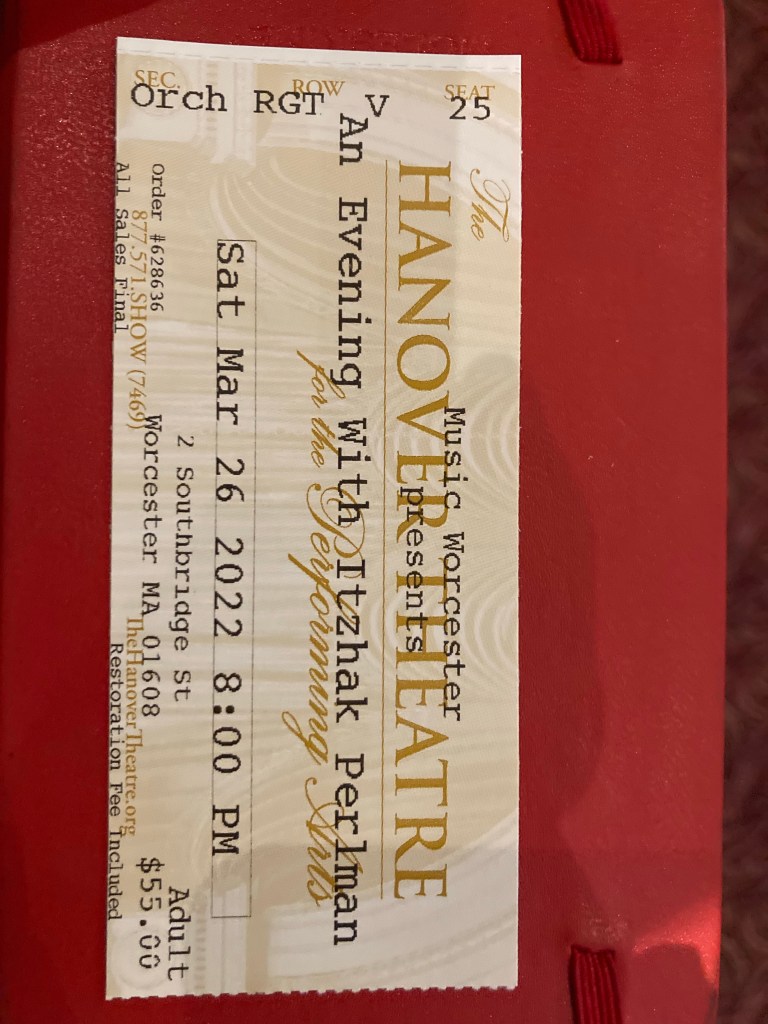
An Evening with Itzhak Perlman

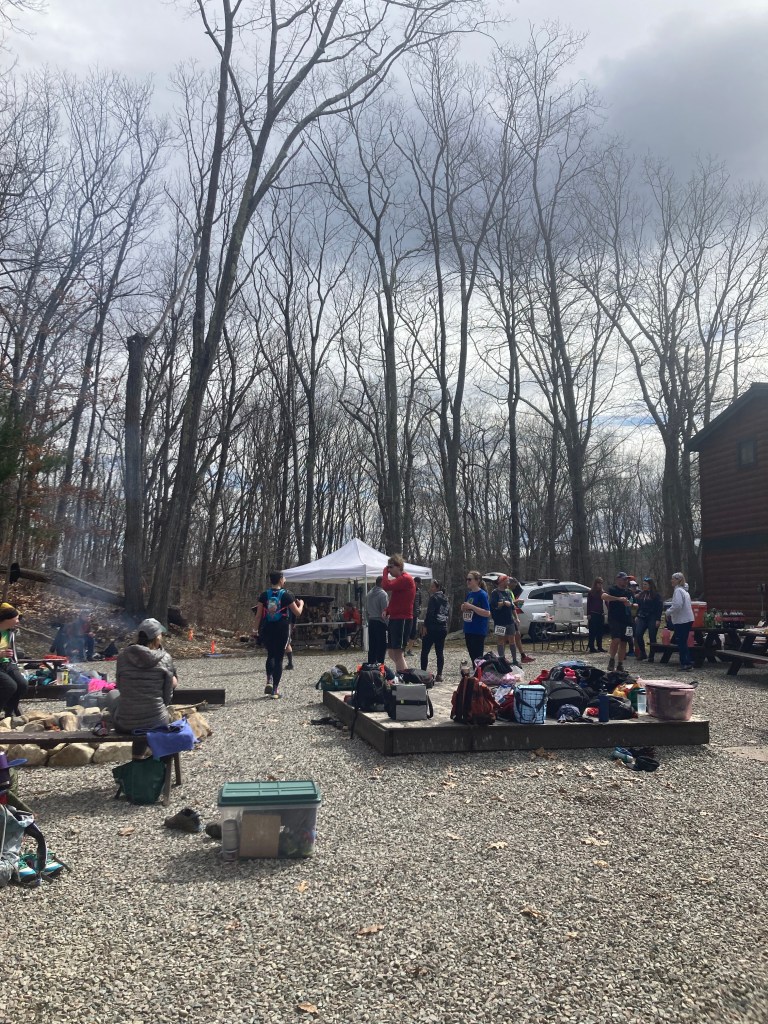
Yesterday began with a 5K around Jamaica Pond and then a trip to the Hale Reservation to watch a trail race. It was beautiful spring weather. But then it started to rain, just as I got in the car to go to Worcester.

No matter. Aided by the klezmer album “In the Fiddler’s House,” I arrived well before the night’s performance, An Evening with Itzhak Perlman.

And what a show it was. Along with being a violin virtuoso, Perlman was a master storyteller, full of warmth and humor. He also had a plethora of photos and videos projected behind him.

He started talking of Russia and Ukraine (his parents were Polish refugees to Tel Aviv and he seemed profoundly affected by the war). He said he hoped his music would be an “elixir” to help us stop worrying about global events.

And it did. From Brahms to Schindler’s list, his tone was incredibly warm, just like his personality.

But most memorable was his discussion of his experience with polio. He came on stage in a motorized wheelchair and showed several photos and videos of himself struggling with crutches and leg braces. He also struggled with frequent discrimination and self doubt.

Itzhak Perlman had problems with self-doubt? Oh yes – he is human. But he is resilient; he perseveres.

The night was inspirational – his elixir worked.

Yesterday at the trail race
The trail run aid station
If you go the wrong way in life, turn around.

Thanks for reading my blog entry. If you enjoyed this post, please leave a reply below where it says “enter your comments here.” If you would like to be on my email list, please type in your email address on this website where it says “enter your email address.” Then, click the red button which says “Follow.” You will receive a message and after you click it, and you will receive my daily blog posts