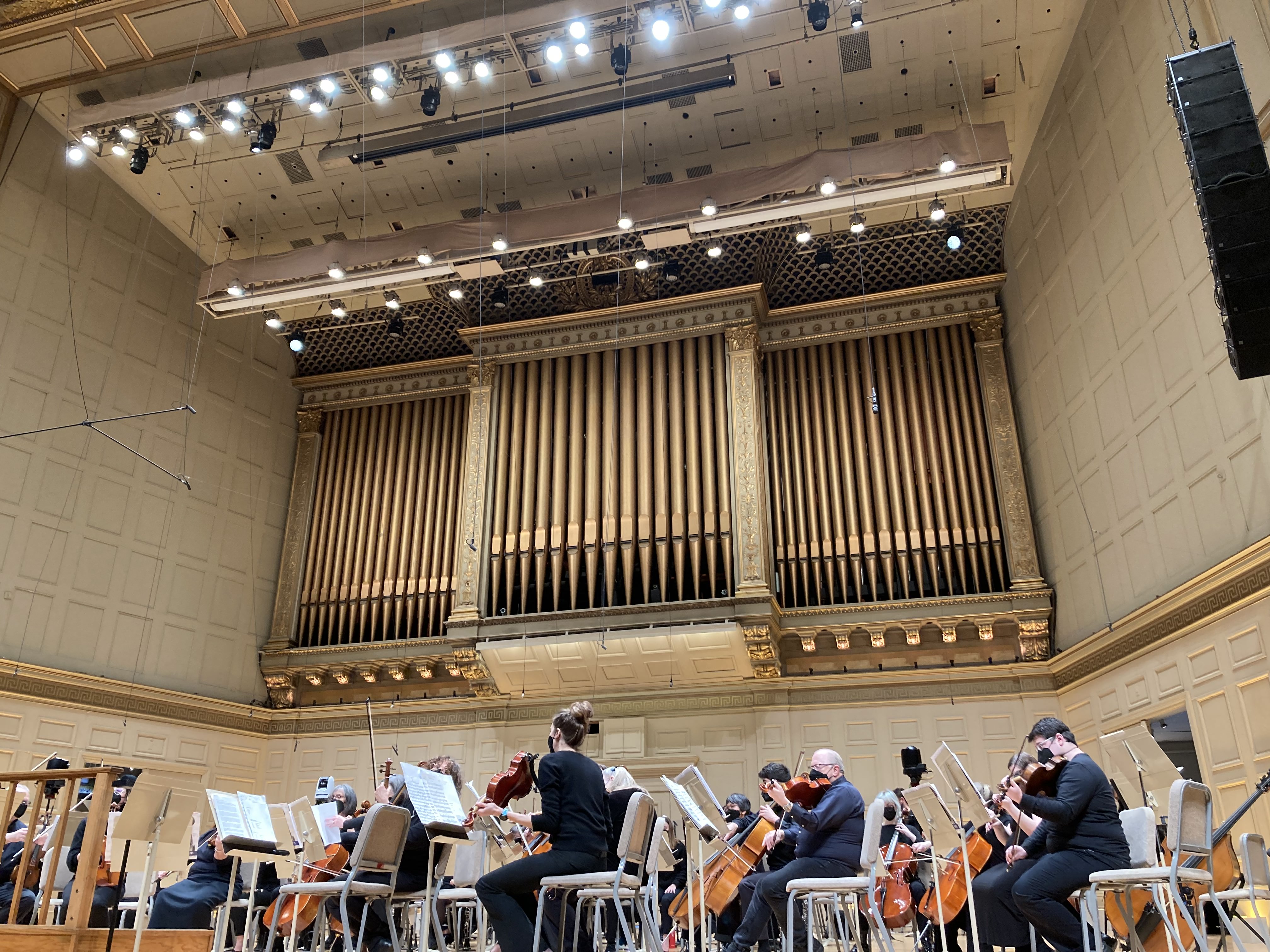
Earlier today, I sat in the fifth row at Boston’s Symphony Hall, next to my seventy-one year old mother, and we watched and listened as the Me/2 Orchestra performed selections by Berlioz, Elgar, Rossini, Grieg, Beethoven, and Milad Yousufi, a young Afghan composer. It was an inspirational, yet odd experience to be in the audience, because I have been an active member of the Me/2 Orchestra for the past several years, playing the violin. I even had the opportunity to join the group on New York City’s Lincoln Center Plaza last October.
But the past couple of months I felt uneasy about Omicron safety measures, and I decided not to participate in rehearsals for the Symphony Hall concert. Even as recently as a week ago I changed my mind and decided to play in the concert, but then flip-flopped again one afternoon when I felt under the weather. However, this is Symphony Hall, home of the Boston Symphony Orchestra, and I had to come see my friends perform.
I’m certainly biased, but I think the music today was beautiful, particularly Freedom, Yousufi’s hypnotic, gyrating work which alternated between G-minor and G-major chords, with E-flat and D thrown in. Concertmaster James Hanford and principal bassist Rusty Chandler led with panache, as inspirational Ronald Braunstein spurred the group on. If you had been worried about the imbroglio of Omicron transmission, like I was, there was no mention of it. During a standing ovation, the young composer Yousufi half-bounded, half-danced his way toward the stage, his long hair bouncing in the air.
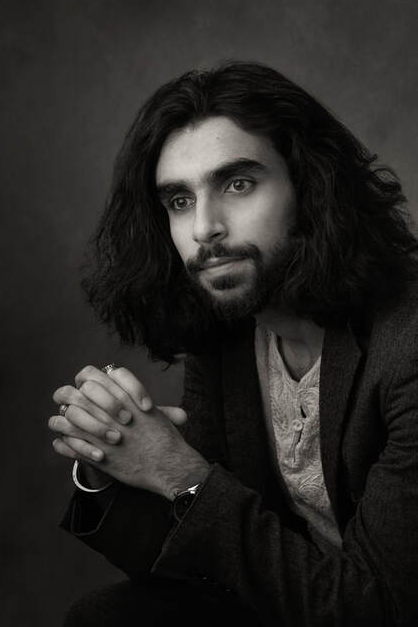
During the show, I was thinking about how the United States has mistreated Afghanistan over the years, and the current crisis there, a “tsunami of hunger” under American sanctions. But moreover, I was pondering the topic of “mental illness” itself, because the Me/2 Orchestra’s mission is to end stigma regarding mental health through classical music.
Of course, people suffer and become quite distressed (I’ve been there, more than once). They feel nervous, get “the blues,” and sometimes have psychosis, wild ideas, and become impaired. But “depression,” “anxiety,” or “mania” are very different from HIV, tuberculosis, lung cancer, or diabetes.
In HIV, we have a viral load. In tuberculosis we have a PCR as well as Acid Fast Bacilli smear and culture to look for the mycobacterium tuberculosis bacteria. Lung cancer is diagnosed based on biopsy by a well-trained pathologist, and diabetics can measure their blood sugar. In short those four diseases have objective, scientific ways of making a diagnosis and guiding treatment. Their therapies are based on randomized-placebo controlled, blinded clinical trials and meta-analyses.
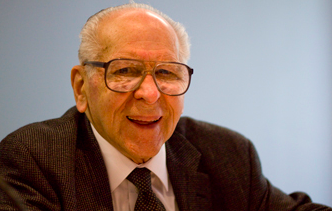
In comparison, biological psychiatry is mostly an art, even as it often attempts to portray itself as mostly a science. “SIGECAPS,” the acronym used to diagnose depression, is subjective, for example. It’s difficult to be a psychiatrist, because patients often are unhappy, nervous, and can get quite sick, and the American health care system is broken. But importantly, coercion in psychiatry is dangerous, as the late Dr. Thomas Szasz, a Hungarian-American professor explained in his book, “The Myth of Mental Illness.”
We also need to pay attention to the writing of Erving Goffman, medical sociologist, who wrote Asylums. Moreover, what we need to do is understand the root causes of mental sickness, from genetics to adverse childhood experiences to trauma and social factors. Medical anthropology as a discipline can play a key role here, and I feel fortunate to have worked closely with a medical anthropologist in Mozambique in 2013 and to have absorbed a bit about the discipline.
In addition, we need to learn more about the recovery process, particularly how tools like Wellness Recovery Action Plans can help. A mental health “diagnosis” like “depression” is not necessarily a lifelong one.
Another big issue is something called the “sick role” – as elaborated by medical sociologist Talcott Parsons in 1951. I believe the passivity of the sick role can be overcome for many people, through a focus on wellness-promoting activities, such as music, dancing, and exercise.
I’m not saying I’m against all psychiatric medications – I am a licensed, practicing physician who takes pills prescribed to me, after all. But everyone knows that pills are not a panacea.
In any event, music can help end the stigma and discrimination regarding mental health, if each of us speaks out. And the Me/2 Orchestra certainly put on a badass show at Symphony Hall this afternoon. Here’s to more works by Milad Yousufi, action to end the starvation in Afghanistan, and to healing in 2022!
 Philip A. Lederer
Wow – that is a provocative post.
Thanks!
This is fabulous Phil! I love the way you encompass wellness here – the tenets of lifestyle medicine described so authentically! I also love your logo – being trained as a yoga teacher and movement therapist I have seen these modalities bring many people closer to wellness or at least allow them to access their tools better 🙂 stay well and thanks for sharing your light! And dance/movement and yoga contribute deeply to my own wellness as well.
Wow! Interesting . . .
On Sun, Jan 23, 2022 at 10:23 PM Health and Healing wrote:
> Philip Lederer MD posted: ” Earlier today, I sat in the fifth row at > Boston’s Symphony Hall, next to my seventy-one year old mother, and we > watched and listened as the Me/2 Orchestra performed selections by Berlioz, > Elgar, Rossini, Grieg, Beethoven, and Milad Yousufi, a young Afgha” >
Thanks mom…
brilliant Hungarian writer